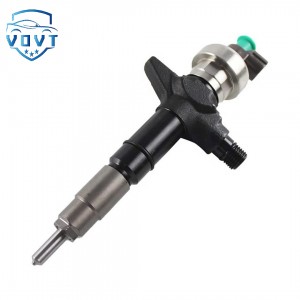
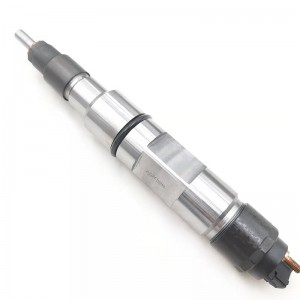
The internal flow behavior within a diesel injector nozzle has a significant impact on spray stability and atomization quality. Under high-pressure conditions, fuel passes through extremely small nozzle holes at high velocity. During this process, complex flow phenomena such as flow separation and turbulence may occur inside the nozzle passages.
Flow separation typically occurs when the fuel flow detaches from the internal wall of the nozzle hole. This can happen due to sudden changes in geometry, sharp edges, or high velocity gradients. When separation occurs, it creates low-pressure zones and irregular flow patterns within the hole.
These internal disturbances directly affect the spray emerging from the nozzle. Instead of forming a stable and uniform jet, the spray may become asymmetric or fluctuate over time. This instability can lead to uneven droplet distribution, affecting fuel-air mixing inside the combustion chamber.
One important factor influencing flow separation is the inlet geometry of the nozzle hole. A sharp-edged inlet may promote turbulence and increase the likelihood of separation, while a smoothly rounded inlet helps guide the flow more steadily into the hole. However, controlled turbulence can sometimes enhance atomization, so a balance must be achieved.
High injection pressure further intensifies internal flow dynamics. As fuel velocity increases, the tendency for turbulence and separation becomes stronger. While higher pressure improves atomization, it also requires more precise nozzle design to maintain spray stability.
Surface roughness inside the nozzle hole also plays a role. Irregular surfaces can disturb flow and amplify instability. Therefore, high-quality finishing processes are necessary to ensure smooth internal passages.
Over time, erosion or deposit formation may alter the internal geometry, increasing the likelihood of flow separation. This highlights the importance of material durability and proper fuel quality.
In summary, internal flow separation is a key factor influencing spray instability in diesel injector nozzles. Careful design of hole geometry, surface quality, and operating conditions is essential to achieve stable spray performance and efficient combustion.