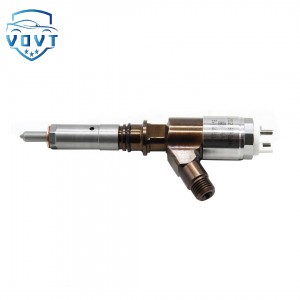
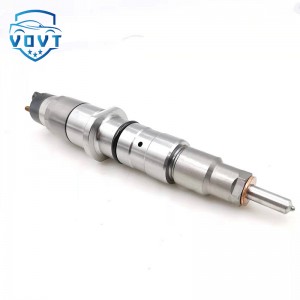
The diesel injector nozzle is a precision component responsible for controlling the final stage of fuel delivery into the combustion chamber. At the core of its operation is the needle valve, whose motion directly determines injection timing, fuel quantity, and spray stability.
The needle is normally held closed by a spring force or hydraulic pressure. When fuel pressure reaches a calibrated threshold, the force acting on the needle overcomes the closing force, causing it to lift. This lifting action opens the flow passages in the nozzle holes, allowing high-pressure fuel to exit at high velocity.
The speed and stability of needle movement are critical for accurate injection. A rapid and controlled lift ensures that fuel flow begins precisely at the intended timing. If needle movement is delayed or unstable, injection timing may shift, affecting combustion efficiency and engine performance.
Needle lift height also influences injection quantity. The relationship between lift distance and flow area must be carefully balanced. Excessive lift may cause unnecessary mechanical impact during closure, while insufficient lift restricts fuel flow and alters spray characteristics.
Hydraulic damping plays an important role in controlling needle motion. Internal fuel passages are designed to manage pressure changes during opening and closing phases. Proper damping reduces vibration and prevents needle bounce, which could result in irregular fuel pulses.
Surface finish and material hardness are essential to maintaining smooth movement. The needle and nozzle body must form a precise sealing pair with minimal clearance. Any wear or deformation increases leakage and affects injection consistency.
Over time, deposits or contamination may restrict needle travel or modify flow paths. Such changes can lead to uneven spray patterns and reduced atomization quality. Regular inspection and proper fuel filtration help preserve nozzle performance.
In summary, the needle motion characteristics within a diesel injector nozzle directly impact injection precision and combustion stability. Accurate mechanical design and controlled hydraulic behavior are fundamental to achieving consistent engine performance.