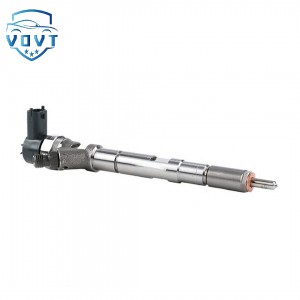
Injection stability is a key requirement for modern engines, and the injector nozzle plays an important role in achieving consistent fuel delivery during each injection cycle. Even when injection pressure and control signals remain unchanged, variations in nozzle behavior can lead to differences in injection quantity and spray formation.
The injector nozzle controls how fuel exits the injector and enters the combustion chamber. During each injection event, the needle lifts and fuel flows through the nozzle holes at high speed. If the nozzle geometry is well designed, the spray pattern remains stable and repeatable. However, small imperfections in nozzle structure can cause fluctuations in fuel flow between cycles.
One factor affecting stability is the alignment between the needle and the nozzle seat. Poor alignment increases friction and may cause uneven needle movement. This results in variations in effective flow area during injection, leading to cycle-to-cycle differences in injection quantity.
Internal flow disturbances also influence nozzle stability. Rapid pressure changes inside the nozzle can generate small flow oscillations, especially near the nozzle inlet. These oscillations affect the velocity and direction of fuel jets, causing slight changes in spray penetration and dispersion from one cycle to another.
Operating conditions such as pressure and temperature further impact nozzle performance. Under high-pressure conditions, flow sensitivity to geometric deviations increases, making nozzle stability more critical. Temperature changes alter fuel viscosity and internal clearances, which can influence injection repeatability.
Long-term operation introduces additional challenges. Wear of the nozzle seat and spray holes gradually changes internal flow characteristics. Although the injector may still function, injection consistency may deteriorate over time, affecting combustion smoothness and engine noise.
To ensure stable injection performance, nozzle design must consider not only spray shape but also dynamic behavior and durability. High-precision manufacturing, strict quality control, and proper material selection are essential. Regular performance testing can help identify early signs of instability.
In conclusion, injector nozzles have a significant influence on injection stability and cycle-to-cycle consistency. Maintaining nozzle integrity and precision is critical for achieving reliable engine operation and long-term performance.