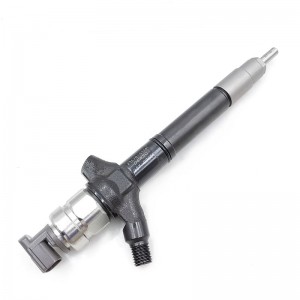
The injector nozzle plays a key role in determining how fuel enters the combustion chamber. While spray hole diameter and number are often discussed, the geometry of the nozzle inlet has a strong influence on the initial stage of fuel injection. This early phase directly affects spray stability and combustion quality.
When injection begins, fuel accelerates rapidly through the nozzle inlet before entering the spray holes. Sharp inlet edges can cause sudden pressure drops and flow separation, leading to unstable jet formation. In contrast, rounded or tapered inlet geometries promote smoother flow acceleration and reduce energy loss during the initial injection phase.
The inlet shape also influences the development of cavitation inside the nozzle. Abrupt geometric changes increase the likelihood of local pressure falling below vapor pressure, generating cavitation bubbles. These bubbles disturb the flow and may cause irregular spray patterns at the start of injection. Proper inlet design helps control cavitation intensity and improves spray repeatability.
Initial injection behavior is especially important in engines using multiple injection events, such as pilot or pre-injection. During these short-duration injections, the spray is dominated by transient flow effects rather than steady-state conditions. A well-designed nozzle inlet allows the spray to develop quickly and consistently, even at low injection quantities.
Manufacturing accuracy of the inlet region is critical. Small deviations in inlet radius or surface finish can cause noticeable differences in initial spray behavior. Precision machining and careful quality control are required to ensure consistent nozzle performance across production batches.
Operating conditions such as fuel pressure and temperature also affect inlet flow behavior. Higher pressure increases flow acceleration, making inlet geometry more influential. Changes in fuel viscosity alter flow response during the initial phase, further emphasizing the need for robust inlet design.
In summary, nozzle inlet geometry has a significant impact on the initial stage of fuel injection. Optimizing inlet shape and surface quality helps improve spray stability, reduce flow disturbances, and enhance combustion performance.