Abstract
Diesel fuel injectors are critical components in fuel delivery systems, responsible for precise fuel atomization and injection timing. Their performance directly affects combustion efficiency, engine power, and emission levels. This paper analyzes the structure, operating principles, and key performance factors of diesel injectors in modern engines.
1. Introduction
In diesel engines, efficient combustion depends on accurate fuel delivery into the combustion chamber. The injector serves as the final control point, determining how fuel is introduced under high pressure. With the advancement of electronic control systems, injectors have become increasingly sophisticated, enabling improved engine performance and reduced environmental impact.
2. Working Principle
A diesel injector receives high-pressure fuel from the pump or common rail and injects it into the cylinder through a finely designed nozzle. The injection process must occur within a very short time frame and under precise control. In electronically controlled systems, solenoid or piezo actuators regulate the opening and closing of the needle valve, allowing multiple injections within a single combustion cycle. This improves fuel-air mixing and combustion stability.
3. Structural Components
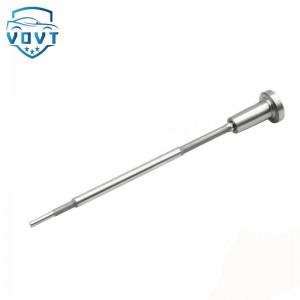
The injector is composed of several precision parts, including the nozzle, needle valve, spring, actuator, and injector body. The nozzle plays a crucial role in determining spray pattern and droplet size, while the needle valve controls fuel flow. These components operate under extreme pressure and temperature, requiring high manufacturing accuracy and durable materials.
4. Performance Factors
Injector performance is influenced by fuel pressure, fuel quality, and component condition. Poor-quality fuel can lead to nozzle clogging or erosion, affecting spray uniformity. Wear or internal leakage may result in delayed injection or inconsistent fuel delivery, leading to reduced engine efficiency and increased emissions.
5. Maintenance and Application
Regular inspection and maintenance are essential to ensure injector reliability. Cleaning, calibration, and timely replacement of worn parts can prevent major engine issues. In automotive and industrial applications, well-functioning injectors contribute to optimal engine performance and lower operating costs.
6. Conclusion
Diesel fuel injectors play a vital role in achieving efficient and clean combustion. As technology evolves, injectors continue to advance in precision and control capabilities. Their proper design, maintenance, and application are essential for meeting modern engine performance and emission standards.