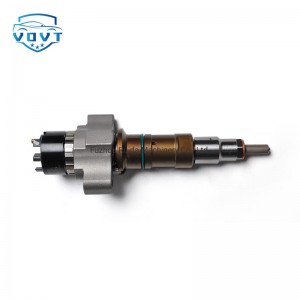
The matching relationship between the fuel injector spray field and the in-cylinder flow field plays a critical role in determining mixture formation quality and combustion efficiency in modern internal combustion engines. An optimized interaction between fuel spray and air motion can enhance fuel–air mixing, shorten ignition delay, and reduce pollutant emissions. To investigate this interaction mechanism, Particle Image Velocimetry (PIV) was employed to experimentally analyze the matching characteristics between the injector spray field and the combustion chamber flow field under controlled operating conditions.
In this study, a constant-volume optical combustion chamber equipped with quartz windows was used to simulate in-cylinder flow structures. A high-pressure common-rail injector was mounted centrally, and various injection pressures and ambient flow conditions were applied. The airflow inside the chamber was seeded with tracer particles, while a dual-pulse laser system generated a planar light sheet to illuminate the measurement region. A high-speed CCD camera synchronized with the laser pulses captured successive particle images, enabling the calculation of instantaneous velocity vectors through cross-correlation algorithms.
The PIV results revealed that the spatial alignment between the spray penetration direction and the dominant in-cylinder swirl or tumble flow significantly influenced spray dispersion behavior. When the spray axis was aligned with the primary airflow direction, the spray exhibited enhanced axial penetration and reduced radial dispersion, resulting in locally rich mixture regions. Conversely, when the spray interacted transversely with the in-cylinder flow, strong shear layers formed at the spray boundary, promoting secondary breakup and improved fuel–air mixing. This interaction was particularly pronounced at higher injection pressures, where spray momentum increased sensitivity to flow-field orientation.
Velocity field analysis showed that the spray-induced entrainment effect substantially modified the original flow structure within the combustion chamber. In cases of favorable matching, the spray enhanced large-scale vortical structures, leading to more uniform velocity distribution and improved mixing homogeneity. In contrast, poor matching conditions caused flow stagnation zones and asymmetric spray development, which are detrimental to stable combustion.
Furthermore, quantitative analysis of turbulent kinetic energy indicated that optimized spray–flow matching could increase turbulence intensity in the near-field region of the spray, accelerating evaporation and mixture preparation. These findings highlight the importance of coordinated design of injector spray characteristics and combustion chamber air-motion structures.
In conclusion, PIV-based experimental analysis provides valuable insight into the coupling mechanisms between injector spray fields and combustion chamber flow fields. The results demonstrate that proper matching between spray orientation, injection parameters, and in-cylinder airflow can significantly improve mixture formation quality. This study offers experimental guidance for injector optimization and combustion chamber design aimed at achieving high efficiency and low emissions in advanced engine systems.