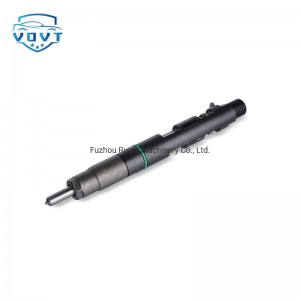
In modern fuel injection systems, the interaction between the injector spray and the airflow inside the combustion chamber has a strong influence on combustion quality. To better understand this interaction, Particle Image Velocimetry (PIV) is widely used as an experimental tool to observe and measure the coupling behavior between fuel spray and in-cylinder flow.
In this study, a simplified optical combustion chamber is designed to allow clear visualization of airflow and spray development. The chamber is equipped with a transparent wall, and air is seeded with fine tracer particles. A pulsed laser is used to generate a thin light sheet across the observation area. During injection, a high-speed camera records the motion of particles and spray structures at different time steps.
PIV image processing is applied to calculate airflow velocity fields before and during fuel injection. By comparing the flow field with and without spray, the influence of the spray on air motion can be clearly identified. Experimental results show that the fuel spray significantly disturbs the original airflow structure, especially near the nozzle exit and along the spray boundary.
When the spray enters regions with strong rotational airflow, such as swirl or tumble zones, the spray trajectory is deflected and stretched by the air motion. PIV results indicate that this interaction increases turbulence intensity around the spray, which enhances fuel–air mixing. However, in regions with weak airflow, the spray maintains a more compact structure and mixing efficiency is reduced.
The timing of injection also affects spray–flow matching. Early injection allows more time for the spray to interact with the airflow, resulting in a wider spray dispersion area. Late injection leads to limited interaction time, and PIV measurements show reduced velocity exchange between spray and air.
These experimental observations demonstrate that spray behavior cannot be evaluated independently from the combustion chamber flow field. PIV testing provides a reliable method to analyze spray–air interaction in a quantitative and visual manner. The results emphasize that injector nozzle design and injection strategy should be coordinated with combustion chamber airflow characteristics to achieve better mixing and stable combustion performance.