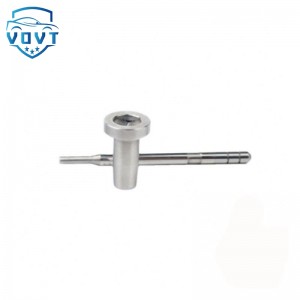
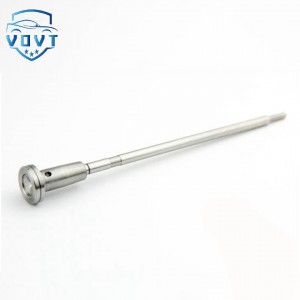
The injector nozzle is a key component responsible for delivering fuel into the combustion chamber in a controlled and precise manner. Its design directly influences spray formation, fuel distribution, and combustion efficiency. Although the nozzle is a small part of the injector, its performance has a significant impact on overall engine behavior.
Injector nozzles typically consist of a nozzle body, a needle valve, and one or more spray holes. During injection, the needle lifts from the nozzle seat, allowing high-pressure fuel to pass through the spray holes and form fuel jets. The geometry of these holes determines the spray pattern, penetration depth, and dispersion of fuel droplets.
The size and number of spray holes affect fuel atomization. Smaller hole diameters generally produce finer droplets, which improve fuel–air mixing. However, very small holes increase flow resistance and may reduce injection quantity at high engine loads. Therefore, nozzle design must balance atomization quality and fuel delivery capacity.
Flow behavior inside the nozzle also plays an important role in spray stability. As fuel accelerates through narrow passages, pressure changes and flow separation may occur. These phenomena influence jet shape and spray consistency. Smooth internal surfaces and well-shaped inlet edges help reduce flow disturbance and promote stable spray formation.
Sealing performance between the needle and nozzle seat is critical for preventing fuel leakage. Poor sealing can cause dripping after injection, leading to incomplete combustion and increased emissions. High precision machining and proper material hardness are required to ensure reliable sealing under high pressure and repeated operation.
Operating conditions such as fuel pressure and temperature also affect nozzle performance. Higher pressure increases spray penetration and improves atomization, while temperature changes alter fuel viscosity and flow behavior. A well-designed nozzle maintains stable performance across a wide range of operating conditions.
In summary, the injector nozzle plays a vital role in controlling fuel spray characteristics and combustion quality. Optimized nozzle geometry, reliable sealing, and stable flow behavior are essential for achieving efficient and clean engine operation.