< img height="1" width="1" style="display:none" src="https://www.facebook.com/tr?id=246923367957190&ev=PageView&noscript=1" /> China New High Quality Diesel Nozzle DLLA155P1025 for Injection Nozzle Diesel Engine Parts factory and manufacturers | Ruida
Fuzhou Ruida Machinery Co., Ltd.
CONTACT US

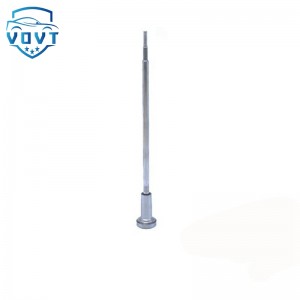
New High Quality Diesel Nozzle DLLA155P1025 for Injection Nozzle Diesel Engine Parts

Product Details:

The Nozzle DLLA155P1025 has been given to the energy exchange mechanisms governing spray–flow matching.

  • Description: Diesel Injector Nozzle
  • Place of Origin: China
  • Brand Name: VOVT
  • Reference Codes: DLLA155P1025
  • Certification: ISO9001
  • Condition: New
  • Payment & Shipping Terms:

  • Minimum Order Quantity: 12pcs
  • Packaging Details: Neutral Packing
  • Delivery Time: 7-15 work days
  • Payment Terms: T/T, L/C, Paypal, Western Union, MoneyGram
  • Supply Ability: 10000 per day
  • Product Detail

    Product Tags

    Products Description

    Reference. Codes DLLA155P1025
    Application /
    MOQ 4PCS
    Certification ISO9001
    Place of Origin China
    Packaging Neutral packing
    Quality Control 100% tested before shipment
    Lead time 7~10 working days
    Payment T/T, L/C, Paypal, Western Union, MoneyGram or as your requirement

    PIV-Based Investigation of Energy Exchange and Turbulence Interaction between Injector Spray and Combustion Chamber Flow

    Efficient fuel–air mixing in internal combustion engines depends on the effective interaction between the injector spray and the in-cylinder airflow. While previous studies have focused primarily on spray penetration or flow structure visualization, limited attention has been given to the energy exchange mechanisms governing spray–flow matching. In this work, Particle Image Velocimetry (PIV) was employed to analyze the energy transfer and turbulence interaction between the injector spray field and the combustion chamber flow field.

    Experiments were conducted in an optically accessible combustion chamber capable of generating controlled air motion with adjustable intensity. The injector was operated under various injection pressures, while the airflow strength was independently regulated. PIV measurements were performed to obtain instantaneous velocity fields before and after injection, enabling the calculation of turbulent kinetic energy and velocity fluctuation intensity within the interaction zone.

    The results demonstrated that effective spray–flow matching is closely associated with balanced energy exchange. When the kinetic energy of the spray jet was comparable to that of the surrounding airflow, a strong coupling region developed near the spray boundary. In this region, large-scale airflow structures were fragmented into smaller vortices, increasing turbulence intensity and promoting rapid fuel dispersion. Conversely, excessive spray energy suppressed airflow motion, resulting in a narrow spray plume with limited lateral mixing.

    Turbulence scale analysis revealed that favorable matching conditions enhanced the cascade from large-scale vortices to small-scale turbulent structures. PIV-derived velocity spectra showed an increase in high-frequency velocity fluctuations in well-matched cases, indicating intensified micro-mixing. In contrast, poor matching conditions exhibited dominant low-frequency components, suggesting insufficient turbulent breakdown and reduced mixing efficiency.

    To quantitatively assess spray–flow interaction quality, a dimensionless energy coupling coefficient was introduced based on the ratio of spray-induced kinetic energy to ambient airflow energy. This coefficient showed a strong correlation with turbulence enhancement and spray dispersion uniformity, providing a useful metric for evaluating matching effectiveness.

    In summary, the PIV-based analysis of energy exchange and turbulence interaction offers a deeper understanding of spray–flow matching mechanisms. The findings suggest that optimal injector design and injection strategies should aim to balance spray and airflow energy levels to maximize turbulent mixing. This study provides a new experimental perspective for optimizing combustion chamber air-motion design and fuel injection parameters in advanced engine systems.

    Related products

    NO. STAMPING NO. ORIGINAL NO.
    1 DLLA140PN003 105017-0030
    2 DLLA140PN013 105017-0130
    3 DLLA140PN291 105017-2910
    4 DLLA143PN265 105017-2650
    5 DLLA143PN325 105017-3250
    6 DLLA145PN238 105017-2380
    7 DLLA146PN028 105017-0280
    8 DLLA146PN055 105017-0550
    9 DLLA146PN218 105017-2180
    10 DLLA146PN220 105017-2200
    11 DSLA149PN903 105017-9030
    12 DLLA150PN021 105017-0211
    13 DLLA150PN056 105017-0560
    14 DLLA150PN088 105017-0880
    15 DLLA150PN315 105017-3150
    16 DLLA151PN086 105017-0860
    17 DLLA152PN009 105017-0090
    18 DLLA152PN014 105017-0140
    19 DLLA152PN184 105017-1840
    20 DLLA152PN063 105017-0630
    21 DLLA152PN077 105017-0770
    22 DLLA153PN152 105017-1520
    23 DLLA153PN177 105017-1770
    24 DLLA153PN178 105017-1780
    25 DLLA153PN203 105017-2030
    26 DLLA154PN005 105017-0051
    27 DLLA154PN006 105017-0061
    28 DLLA154PN007 105017-0700
    29 DLLA154PN0171 105017-0171
    30 DLLA154PN040 105017-0400
    31 DLLA154PN049 105017-0490
    32 DLLA154PN061 105017-0610
    33 DLLA154PN062 105017-0620
    34 DLLA154PN064 105017-0640
    35 DLLA154PN067 105017-0670
    36 DLLA154PN068 105017-0680
    37 DLLA154PN087 105017-0870
    38 DLLA154PN089 105017 -0890
    39 DLLA154PN101 105017-1010
    40 DLLA154PN116 105017-1160
    41 DLLA154PN155 105017-1550
    42 DLLA154PN0171 105017-0171
    43 DLLA154PN185 105017-1850
    44 DLLA154PN186 105017-1860
    45 DLLA154PN208 105017-2080
    46 DLLA154PN270 105017-2700
    47 DLLA154PN940 105017-9400
    48 DLLA155PN046 105017-0460
    49 DLLA155PN053 105017-0530
    50 DLLA155PK107 105017-1070

  • Previous:
  • Next:

  • Write your message here and send it to us