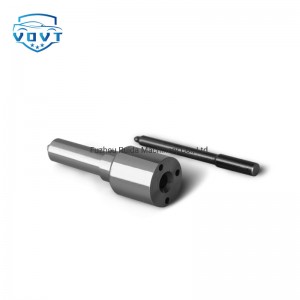
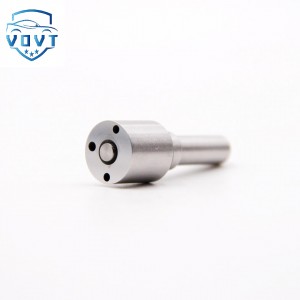
Spray penetration is a key characteristic of diesel injector nozzles that determines how far the injected fuel travels into the combustion chamber. It directly affects how efficiently fuel interacts with compressed air, which in turn influences combustion quality and engine performance.
When fuel is injected at high pressure through the nozzle holes, it forms high-speed jets that penetrate into the surrounding air. The penetration distance depends on several factors, including injection pressure, nozzle hole diameter, spray angle, and ambient air density inside the cylinder.
If the spray penetration is too short, fuel may not fully reach the available air within the combustion chamber. This leads to poor mixing and localized rich zones, resulting in incomplete combustion and increased emissions. On the other hand, excessive penetration can cause fuel to impinge on cylinder walls or piston surfaces, leading to fuel film formation and carbon deposits.
The balance between penetration and atomization is critical. Higher injection pressure increases fuel velocity and penetration distance, while also improving atomization. However, excessive velocity may reduce mixing efficiency if the spray becomes too concentrated in certain regions.
Nozzle design plays a central role in controlling spray penetration. Smaller hole diameters produce finer droplets, which may reduce penetration but enhance evaporation and mixing. Larger holes increase penetration but may generate coarser droplets. Therefore, an optimized combination of hole size and number is required.
Air motion within the combustion chamber also affects penetration behavior. Swirl and turbulence can help break up the spray and distribute fuel more evenly, effectively improving air utilization even with shorter penetration distances.
Fuel properties such as density and viscosity further influence spray development. Variations in these properties can change the momentum of the spray and alter penetration characteristics.
In summary, spray penetration must be carefully controlled to match the combustion chamber environment. Proper nozzle design ensures effective fuel-air interaction, maximizing air utilization and supporting efficient, clean combustion in diesel engines.