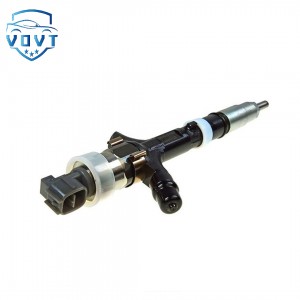
Modern injector nozzles commonly use multiple spray holes to distribute fuel evenly within the combustion chamber. The performance of such nozzles strongly depends on the consistency of individual spray holes. Even small differences between holes can lead to uneven fuel distribution and reduced combustion efficiency.
Spray hole consistency includes parameters such as diameter, length, inlet shape, and orientation angle. Ideally, all holes should produce jets with similar velocity, penetration, and dispersion. When hole dimensions vary, fuel flow rates through different holes become unbalanced. This causes some jets to penetrate deeper while others disperse prematurely, creating non-uniform fuel–air mixing.
Manufacturing tolerances are a major source of spray hole inconsistency. Micro-scale deviations introduced during drilling or laser machining can significantly affect flow behavior. Surface roughness differences inside spray holes also influence local pressure loss, further increasing jet variation among holes.
During injection, the interaction between multiple fuel jets adds complexity to nozzle performance. Jets may collide with surrounding airflow or interact with each other, especially in compact combustion chambers. If spray holes are not well matched, these interactions become unpredictable, leading to unstable spray patterns and increased wall wetting.
Spray hole consistency is particularly critical during low-load and transient engine operation. At low injection quantities, small flow differences between holes become more pronounced, causing cycle-to-cycle spray variation. This directly affects combustion stability and emissions.
Over time, nozzle wear can further increase inconsistency. Erosion of spray hole edges or partial blockage due to deposits alters hole geometry. As a result, nozzle performance gradually degrades even if the injector continues to function.
To ensure reliable multi-hole nozzle performance, strict manufacturing control and inspection are essential. Advanced measurement techniques are often used to verify hole geometry and flow balance. Regular maintenance and timely nozzle replacement help maintain consistent spray behavior.
In summary, spray hole consistency is a key factor in determining multi-hole injector nozzle performance. Maintaining uniform hole geometry and flow characteristics is essential for stable fuel distribution and efficient combustion.