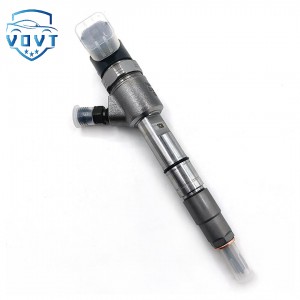
As fuel injection systems continue to evolve toward higher pressures and finer spray control, injector nozzle materials are exposed to increasingly severe mechanical and chemical stresses. Conventional surface treatments are often insufficient to ensure long-term stability under these conditions. Nano-ceramic coatings have therefore gained attention as an advanced solution for enhancing the functional reliability of injector nozzles.
Unlike traditional hard coatings, nano-ceramic coatings rely on a refined grain structure and strong interfacial bonding to improve surface performance. During deposition processes such as physical vapor deposition or plasma-assisted spraying, nano-scale ceramic particles are uniformly distributed and tightly bonded to the nozzle substrate. This microstructure reduces the presence of microcracks and weak interfaces, which are common initiation points for wear and corrosion damage.
One of the key functional mechanisms of nano-ceramic coatings is stress dispersion. During high-frequency injection cycles, the nozzle surface experiences repeated impact and shear forces from fuel flow and needle motion. The nano-structured coating layer helps redistribute localized stresses, reducing plastic deformation of the underlying metal. This mechanism effectively delays fatigue-related surface damage and maintains consistent nozzle geometry over extended operating periods.
Thermal stability is another important advantage. Injector nozzles often operate under rapid temperature fluctuations caused by intermittent combustion heat and fuel cooling. Nano-ceramic materials typically exhibit low thermal conductivity and high thermal resistance, which limits heat transfer to the metal substrate. This thermal barrier effect reduces thermal expansion mismatch and helps prevent surface oxidation and microstructural degradation.
From a system-level perspective, improved nozzle durability contributes directly to injection stability. Reduced wear of spray holes minimizes changes in flow area, ensuring stable injection quantity and repeatable spray patterns. This consistency supports better air–fuel mixing and more predictable combustion behavior, which is especially important for engines operating under strict emission regulations.
To evaluate the effectiveness of nano-ceramic coatings, functional testing is often combined with long-term durability simulations. Parameters such as injection repeatability, pressure response, and leakage behavior are monitored before and after endurance testing. Coated nozzles typically demonstrate slower performance degradation and lower maintenance requirements compared with untreated components.
In summary, nano-ceramic coatings enhance injector nozzle performance not only by improving wear and corrosion resistance, but also by stabilizing thermal and mechanical behavior under dynamic operating conditions. Their functional advantages make them a promising surface engineering solution for next-generation fuel injection systems.