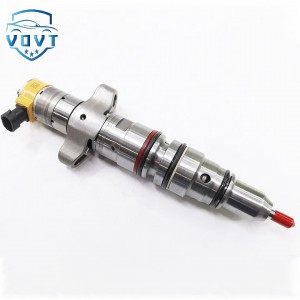
The matching between the fuel spray field of an injector nozzle and the air flow field inside the combustion chamber plays a critical role in engine combustion performance. Proper interaction between spray and air motion helps improve fuel–air mixing, combustion efficiency, and emission characteristics. In this study, Particle Image Velocimetry (PIV) is used as a visualization and measurement technique to investigate the matching relationship between injector spray behavior and in-cylinder flow structures.
A transparent combustion chamber model is used to simulate typical engine intake flow conditions. The air inside the chamber is seeded with tracer particles, and a laser light sheet is generated to illuminate the measurement region. When fuel is injected, high-speed cameras capture sequential images of both the spray and surrounding airflow. By processing these images, velocity vectors of the flow field can be obtained.
The PIV results show that the spray penetration direction and spray cone angle strongly influence the interaction with the in-cylinder swirl and tumble flows. When the spray direction is aligned with the main air motion, the fuel jet follows the airflow and spreads more uniformly within the chamber. This condition promotes better fuel distribution and reduces local fuel-rich regions.
In contrast, when the spray direction conflicts with the dominant airflow, strong flow separation occurs near the spray boundary. This leads to unstable spray development and uneven fuel distribution. PIV measurements indicate increased velocity gradients and vortex formation in these cases, which may cause incomplete mixing and higher emissions.
The effect of injection pressure on spray–flow matching is also investigated. Higher injection pressures increase spray momentum, allowing the spray to penetrate deeper into the combustion chamber. However, excessive momentum reduces the influence of airflow on spray dispersion, weakening the benefit of flow-guided mixing.
Overall, PIV testing provides clear visual and quantitative evidence of how injector spray characteristics interact with combustion chamber airflow. The results highlight the importance of coordinating injector nozzle design and injection parameters with combustion chamber flow structures. Proper matching between spray and airflow is essential for achieving stable combustion, improved efficiency, and reduced emissions in modern engines.