
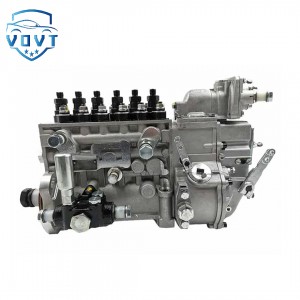
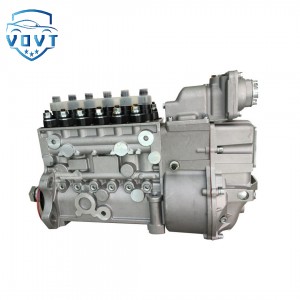
Diesel Fuel Injection Pump 319-0675 Engine Auto Engine Part


products description
| Reference Code | 319-0675 |
| MOQ | 1 PCS |
| Certification | ISO9001 |
| Place of Origin | China |
| Packaging | Neutral packing |
| Quality Control | 100% tested before shipment |
| Lead time | 7~15 working days |
| Payment | T/T, Western Union, Money Gram, Paypal, Alipay, Wechat |
Transient Performance Enhancement of Engine Oil Pumps during Cold Start Operation
Cold start represents a highly transient operating condition for internal combustion engines, during which the lubrication system must rapidly adapt to extreme changes in oil properties and mechanical demand. Low ambient temperatures significantly increase oil viscosity, which not only affects pump efficiency but also alters the dynamic behavior of the entire lubrication system. In this context, the transient response of the engine oil pump during cold start becomes a critical factor influencing engine reliability and wear.
One major issue observed during cold start is delayed oil pressure buildup. High oil viscosity restricts flow through narrow lubrication passages, while air entrainment in the oil further reduces effective oil delivery. During the initial cranking phase, the oil pump may experience partial cavitation or unstable suction conditions, resulting in fluctuating outlet pressure and insufficient lubrication of friction pairs. These effects are particularly pronounced in engines with long oil galleries or complex lubrication networks.
Improving the suction performance of the oil pump is an effective way to enhance cold-start behavior. Optimizing inlet geometry, increasing inlet cross-sectional area, and reducing local flow separation can improve oil filling characteristics at low temperatures. In addition, incorporating anti-aeration features in the oil sump and pump inlet helps suppress air ingestion, leading to faster pressure stabilization during startup.
Another important optimization strategy involves improving the dynamic matching between pump output and lubrication demand. Traditional fixed-displacement pumps often deliver excessive pressure once oil temperature begins to rise, causing frequent pressure relief valve activation and energy loss. By contrast, oil pumps with adaptive flow control can provide higher flow during the initial cold start phase and gradually reduce output as lubrication conditions stabilize. This dynamic regulation improves both cold-start protection and overall system efficiency.
Thermal management also plays a role in cold-start oil pump performance. Localized heating of the pump housing using waste engine heat or electric heating elements can reduce oil viscosity in critical regions, improving pump efficiency during the early startup stage. Although this approach introduces additional complexity, it offers significant benefits in extremely cold climates.
In summary, enhancing oil pump performance under cold-start conditions requires a system-level optimization approach that considers transient flow behavior, air–oil interaction, and dynamic flow regulation. By improving suction characteristics, reducing aeration, and enabling adaptive output control, oil pumps can achieve faster lubrication response and more stable pressure delivery. These improvements are essential for reducing startup wear and ensuring long-term engine durability, particularly in low-temperature operating environments.
Products categories
-

Diesel Fuel Injection Pump 319-0676 Engine Auto...
-
Top Quality Diesel Injection Pump BHT6P120R Fue...
-

High Quality Diesel Fuel Injection Pump BH4PN12...
-
0 460 423 082 Diesel Fuel Injection Pump 046042...
-

High Quality New Fuel Injection Pump BH4AD95R D...
-
Hot Selling Diesel Fuel Unit Pump 02112860 for ...


