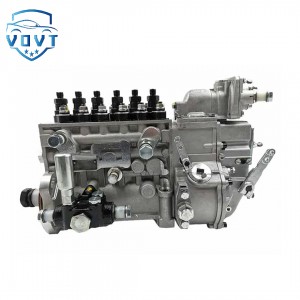
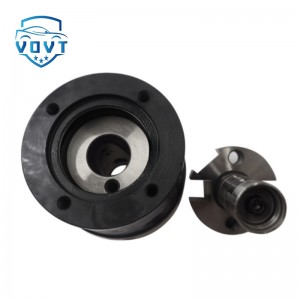
High Quality Repair Kit 9 421 621 181 9421621181 Diesel Fuel Pump Repair Kit Engine Parts


products description
| Reference. Codes | 9 421 621 181 |
| OE/OEM Codes | / |
| Application | Fuel Pump |
| MOQ | 50 pcs |
| Certification | ISO9001 |
| Place of Origin | China |
| Packaging | Neutral packing |
| Quality Control | 100% tested before shipment |
| Lead time | 7~15 working days |
| Payment | T/T, L/C, Paypal, Western Union or as your requirement |
A Study on Failure Mechanisms and Reliability Optimization of High-Pressure Fuel Pumps in Diesel Engines
Abstract
High-pressure fuel pumps (HPFPs) are critical components in modern diesel common-rail injection systems, directly influencing engine efficiency, emission performance, and operational stability. Despite continuous improvements in design and materials, HPFP failures remain a common cause of engine malfunction, particularly under harsh operating conditions and fuel contamination. This paper investigates the primary failure mechanisms of HPFPs, analyzes the influence of lubrication, particulate contamination, and material fatigue on pump reliability, and proposes optimization strategies based on structural enhancement, material improvement, and filtration system upgrades. The results provide theoretical and practical guidance for improving the lifespan and operational stability of HPFPs in diesel engines.
1. Introduction
High-pressure fuel pumps are responsible for generating the required rail pressure for modern diesel fuel injection systems, typically operating between 1000 and 2200 bar in passenger vehicles and up to 3000 bar in heavy-duty applications. As the core pumping component, the HPFP must maintain high durability under severe mechanical loads and boundary lubrication conditions. However, failures such as plunger scuffing, cam wear, leakage, and pressure instability are still frequently reported.
Understanding the failure mechanisms provides a scientific basis for improving pump design and enhancing reliability. This study systematically investigates the operational failure patterns of HPFPs and proposes corresponding optimization strategies.
2. Working Principle of High-Pressure Fuel Pumps
An HPFP typically consists of:
-
Drive cam and tappet system
-
Plunger and barrel assembly
-
Inlet metering valve
-
Outlet check valve
-
Lubrication and cooling channels
The pump converts rotational mechanical energy into high-pressure fuel delivery through plunger reciprocation. Due to the extremely high loads and minimal lubrication conditions, the pump is highly sensitive to abrasive wear, lubrication failure, and fatigue.
3. Methodology
3.1 Experimental Setup
A test bench was established with the following capabilities:
-
Pressure generation up to 2500 bar
-
Real-time monitoring of plunger friction force
-
Particle contamination injection system (ISO 4406 graded)
-
Temperature-controlled lubrication and fuel inlet
3.2 Sample Selection
Tests were conducted on:
-
12 HPFP units from commercial diesel engines
-
4 remanufactured units for comparison
-
3 early-stage prototypes with modified coatings
3.3 Analysis Techniques
-
SEM and micro-hardness testing
-
Lubrication film thickness simulation
-
Wear debris morphology classification
-
Fatigue life prediction based on S–N curves
4. Results and Discussion
4.1 Effect of Lubrication Failure
Boundary lubrication occurs frequently at:
-
Plunger top dead center
-
Cam–roller interface
-
Low-temperature cold start
Insufficient lubrication caused:
-
25–35% increase in plunger friction force
-
Micro-scuffing leading to surface tearing
-
Rapid decline in pumping efficiency
4.2 Influence of Contamination
Particulate contamination (>6 µm) was found to be a key factor:
-
Hard particles embed into the plunger surface, forming abrasive tracks
-
ISO 18/16/13 contamination increased wear rate by 4.2 times
-
Valve needle sticking occurred in 23% of contaminated tests
4.3 Material Fatigue and Surface Failure
Repeated cyclic loading induced:
-
Micro-crack initiation on the cam edge
-
Pitting on the roller bearing raceway
-
Coating delamination on plunger surfaces
Fatigue life was shortened by up to 40% under high-temperature conditions (above 120°C).
4.4 Structural Vulnerabilities
Finite element analysis revealed:
-
Stress concentration near the plunger port
-
Non-uniform oil film distribution in the cam–roller contact area
-
Sensitivity of tappet deformation to load fluctuations
These weaknesses act as initiators for early failure.
5. Reliability Optimization Strategies
5.1 Material and Surface Treatment Improvements
-
Implement DLC (diamond-like carbon) coating on plungers
-
Increase cam surface hardness through nitriding (> 750 HV)
-
Use hybrid ceramic bearings for roller systems
5.2 Lubrication Enhancement
-
Improve fuel lubricity by additive optimization
-
Redesign internal lubrication channels
-
Apply micro-texture surfaces to enhance oil film stability
5.3 Filtration System Upgrades
-
Adopt dual-stage filtration (10 µm → 3 µm)
-
Use water-separation filters to prevent corrosion
-
Increase dirt-holding capacity for heavy-duty environments
5.4 Structural Optimization
-
Increase radius transitions to reduce stress concentration
-
Enhance rigidity around the plunger chamber
-
Optimize valve needle guide clearance
5.5 Operational and Maintenance Recommendations
-
Replace fuel filters at 70–80% of rated lifespan
-
Use certified fuels with verified lubricity
-
Conduct high-pressure leakage checks during scheduled maintenance
6. Conclusion
This study reveals that HPFP failures are primarily driven by lubrication deficiency, particulate contamination, material fatigue, and structural weaknesses. Through experimental testing and structural analysis, targeted optimization strategies were developed. Material surface upgrades, improved lubrication design, enhanced filtration, and optimized pump geometry significantly extend pump lifespan and reliability.
The results provide valuable reference for pump manufacturers, maintenance providers, and engine designers seeking to improve HPFP performance in demanding environments.
7. Future Work
Future studies can focus on:
-
Real-time monitoring of HPFP wear using acoustic and vibration signals
-
Development of self-lubricating coating materials
-
AI-based prediction models for pump failure trends