
High Quality Fuel Rail Pressure Sensors 0 281 002 864 0281002864 Common Rail Pressure Sensor Spare part


Products Description
| Reference Codes | 0 281 002 864 |
| Application | / |
| MOQ | 6 PCS |
| Certification | ISO9001 |
| Place of Origin | China |
| Packaging | Neutral packing |
| Quality Control | 100% tested before shipment |
| Lead time | 7~15 working days |
| Payment | T/T, L/C, Paypal, Western Union, MoneyGram or as your requirement |
Application of Vibration Sensors in Condition Monitoring of Automotive and Mechanical Systems
Vibration sensors are widely used in automotive and industrial systems to monitor mechanical health and detect early-stage faults. Unlike pressure or temperature sensors, vibration sensors focus on capturing dynamic mechanical responses, providing valuable information about component wear, imbalance, misalignment, and structural degradation. Their role has become increasingly important as vehicles and machines move toward predictive maintenance and intelligent diagnostics.
The most commonly used vibration sensors in automotive applications are accelerometer-based sensors, including piezoelectric and MEMS accelerometers. Piezoelectric sensors are known for their high sensitivity and wide frequency response, making them suitable for high-speed rotating components such as shafts and bearings. MEMS-based vibration sensors, on the other hand, offer advantages in compact size, low power consumption, and ease of integration with electronic control units.
In vehicle systems, vibration sensors are typically applied to monitor engines, gearboxes, electric motors, and auxiliary mechanical assemblies. Abnormal vibration patterns often indicate early faults such as bearing pitting, gear tooth damage, or lubrication failure. By continuously collecting vibration data, the control system can identify changes in frequency spectra or amplitude trends, allowing potential failures to be detected before serious damage occurs.
Sensor installation and signal processing are critical factors affecting measurement accuracy. Proper mounting methods, such as rigid surface attachment or threaded installation, help ensure effective vibration transmission. Signal conditioning circuits are used to filter noise and amplify useful signals, while digital signal processing techniques, including fast Fourier transform and envelope analysis, are employed to extract fault-related features.
Environmental adaptability is another key requirement for vibration sensors in automotive applications. Sensors must operate reliably under wide temperature ranges, high vibration levels, and exposure to oil or dust. Protective housings and robust packaging designs are commonly adopted to enhance durability and ensure long-term stability.
The integration of vibration sensors with intelligent algorithms further expands their application potential. When combined with machine learning or pattern recognition techniques, vibration data can be used to classify fault types and predict remaining useful life of mechanical components. This approach reduces unexpected downtime and maintenance costs.
In summary, vibration sensors provide a powerful tool for real-time condition monitoring in automotive and mechanical systems. Their ability to detect subtle mechanical changes enables early fault diagnosis and supports the development of more reliable and intelligent machinery.
Products categories
-

Professional Manufacture Diesel Injector 095000...
-

New High Quality Diesel Injector 172-5780 188-8...
-

New High Quality Diesel Injector 253-0614 10R-3...
-

High Precision Injector Repaire Kits for Fuel I...
-
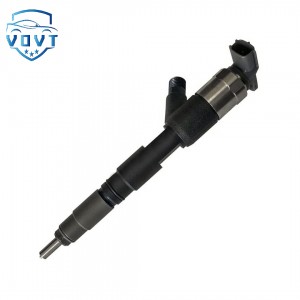
High Quality New Diesel Injector 5367913 G3S127...
-

New High Quality Diesel Injector 184-2527 224-9...


