
Genuine Quality Diesel Injector Repair Kit Adjusting Shim 4x9x0.25 Injector Parts Engine Parts Auto Parts


products description
| Reference. Codes | 4x9x0.25 |
| OE/OEM Codes | / |
| Application | Injector Repair Kits |
| MOQ | 4PC |
| Certification | ISO9001 |
| Place of Origin | China |
| Packaging | Neutral packing |
| Quality Control | 100% tested before shipment |
| Lead time | 7~15 working days |
| Payment | T/T, L/C, Paypal, Western Union or as your requirement |
Influence of Injector Adjustment Shims on Dynamic Injection Behavior
Injector adjustment shims are widely used to fine-tune the mechanical characteristics of fuel injectors. While shims are traditionally associated with static opening pressure calibration, their influence on dynamic injection behavior is equally important, especially in high-speed and high-pressure operating conditions.
During injector operation, the needle is subjected to rapidly changing hydraulic forces and spring loads. The shim thickness directly determines the initial spring preload, which affects not only the opening pressure but also the acceleration and deceleration of needle motion. A higher preload caused by a thicker shim leads to a slower needle lift, increasing the delay between the control signal and actual fuel injection. This delay can influence injection timing accuracy, particularly during short injection events.
In contrast, a thinner shim reduces spring preload and allows faster needle response. However, excessively low preload may cause unstable needle motion, such as bouncing or incomplete sealing during closure. These effects can result in fuel leakage or injection inconsistency, especially under high rail pressure conditions.
Manufacturing tolerances of shims also play a significant role in injector performance. Even small thickness deviations can produce noticeable differences in injection characteristics. When multiple injectors are assembled with shims of varying tolerances, cylinder-to-cylinder injection imbalance may occur. Therefore, tight dimensional control and precise measurement of shim thickness are essential during production and maintenance.
Shim selection also affects the interaction between the injector and the fuel supply system. Changes in needle dynamics alter pressure wave behavior inside the injector, which can influence pressure stability in the high-pressure line. Improper shim adjustment may amplify pressure oscillations, reducing overall system stability.
In modern injector calibration processes, shims are often adjusted together with electronic control parameters to achieve optimal performance. Mechanical tuning through shims provides a stable physical baseline, while electronic control compensates for operating condition variations.
In conclusion, injector adjustment shims influence not only static parameters but also dynamic injection behavior and system interaction. Careful selection and precise control of shim properties are necessary to ensure fast response, stable operation, and consistent fuel delivery in advanced fuel injection systems.
Products categories
-
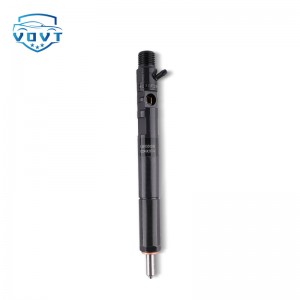
New CR diesel fuel injector EJBR03001D 33800 4X...
-

High Quality Diesel Injector Nozzle 4061854 Fue...
-
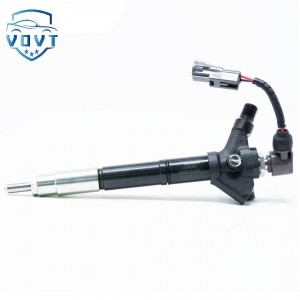
View larger image Add to Compare Share High Qu...
-

China Made Brand New Common Rail Fuel Injector ...
-

New High Quality Diesel Injector 557-7633 557-7...
-

Common Rail Control Valve 28626161 Fuel Injecto...


