
Diesel Fuel Injection Pump Tester PYBK-900 offers multifunctional control for EURO II test bench


products description
| Reference. Codes | PYBK-900 |
| MOQ | 1PCS |
| Certification | ISO9001 |
| Place of Origin | China |
| Packaging | Neutral packing |
| Quality Control | 100% tested before shipment |
| Lead time | 7~10 working days |
| Payment | T/T, L/C, Paypal, Western Union, MoneyGram or as your requirement |
Development of an Intelligent Miniature Testing Instrument for On-Site Diagnostics
In modern industrial environments, rapid fault detection and real-time condition monitoring have become essential requirements for improving equipment reliability and maintenance efficiency. To meet these demands, intelligent miniature testing instruments have been developed as powerful tools for on-site diagnostics, combining compact structure with advanced sensing and data processing technologies.
Unlike traditional laboratory instruments that require fixed installation and complex operation, miniature testing instruments are designed for mobile use and quick deployment. They are usually integrated with multi-functional sensors capable of measuring parameters such as pressure, temperature, speed, current, and vibration. With the support of embedded processors and digital signal processing techniques, these devices can complete data acquisition, analysis, and result display within a very short time.
One of the core features of intelligent miniature testing instruments is their real-time data analysis capability. By embedding diagnostic algorithms and threshold judgment functions, the instruments can directly identify abnormal operating conditions, such as pressure instability, excessive vibration, or temperature overload. This greatly reduces dependence on external computers and professional technicians, enabling frontline operators to make preliminary judgments on equipment health status.
In practical engineering applications, these small testing instruments are widely used in hydraulic systems, fuel supply systems, industrial motors, and mechanical transmission equipment. For instance, in fuel system maintenance, a handheld tester can be connected to the pump or injector to monitor pressure curves and response characteristics, allowing technicians to quickly detect leakage, blockage, or component fatigue. In rotating machinery, portable vibration testers help evaluate bearing wear and imbalance conditions in real time.
In addition to basic measurement and diagnosis functions, modern miniature testing instruments increasingly emphasize connectivity and data management. Through wireless communication technologies such as Bluetooth, Wi-Fi, or LTE, test data can be uploaded to mobile devices or cloud platforms for remote analysis, historical comparison, and fault prediction. This makes it possible to establish a full life-cycle monitoring system for equipment.
With the continuous progress of microelectronics, sensor integration, and artificial intelligence technologies, the future development of miniature testing instruments will focus on higher precision, stronger intelligence, and lower power consumption. They will play an increasingly important role in predictive maintenance, smart manufacturing, and digital industrial management.
Products categories
-

Diesel Fuel Injection Pump 294000-1550 Engine A...
-
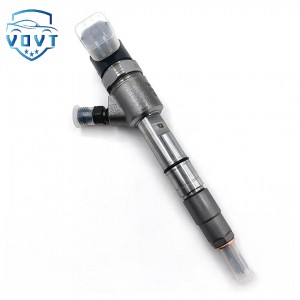
High Quality Diesel injector 0 445 110 330 0445...
-

New High Quality Diesel Injector 249-0708 10R-2...
-

High Performance New Diesel Fuel Injector Solen...
-
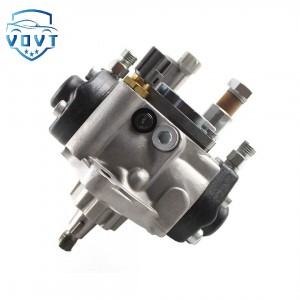
High Quality HP3 High Pressure Pump 294000-2690...
-
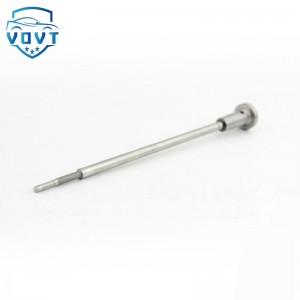
Common Rail Fuel Injector Control Valve Assembl...


