
Diesel Fuel Injection Pump BH3Q75R8 Engine Auto Engine Part


products description
| Reference Code | BH3Q75R8 |
| MOQ | 1 PCS |
| Certification | ISO9001 |
| Place of Origin | China |
| Packaging | Neutral packing |
| Quality Control | 100% tested before shipment |
| Lead time | 7~15 working days |
| Payment | T/T, Western Union, Money Gram, Paypal, Alipay, Wechat |
A Study on Thermal Management Strategies for High-Pressure Fuel Pumps in Modern Engines
High-pressure fuel pumps (HPFPs) play a crucial role in modern gasoline and diesel engine systems, enabling precise fuel metering, higher injection pressures, and improved combustion efficiency. As injection pressures continue to rise—often exceeding 2,000 bar—thermal loads inside the pump also increase significantly. Excessive heat can lead to fuel viscosity reduction, vapor formation, wear accumulation, and even pump seizure. Therefore, developing effective thermal management strategies has become essential for ensuring long-term reliability and performance of HPFPs.
One of the primary sources of heat in HPFPs is friction between the plunger, tappet, and cam interface. As the pump cycles at high speed, boundary lubrication conditions are frequently encountered, generating considerable frictional heat. To address this, advanced surface coatings such as diamond-like carbon (DLC), chromium nitride, and molybdenum disulfide are increasingly applied. These coatings not only reduce friction but also minimize wear and maintain stable operating temperatures. In addition, optimized lubrication channels within the pump housing help improve fuel flow distribution around critical contact surfaces.
Another challenge is heat generated by the rapid pressurization of fuel. When fuel is compressed to extremely high pressures, temperature can increase rapidly due to thermodynamic effects. To mitigate this, engineers employ improved chamber geometries that minimize dead volume and enhance heat dissipation. Computational fluid dynamics (CFD) is often used to simulate temperature gradients and guide the placement of cooling fins or thermal-conductive inserts within the pump body.
Fuel cavitation is also closely linked to thermal behavior. Elevated temperatures reduce the vapor pressure threshold, increasing the likelihood of cavitation bubbles forming and collapsing inside the pump. These micro-implosions can erode metal surfaces and destabilize pressure output. To counter this, variable-flow inlet valves and optimized inlet port angles have been adopted to ensure stable fuel supply and avoid localized overheating.
In hybrid and start–stop engine systems, repeated pump cycling can cause additional thermal fluctuations. As a response, some manufacturers incorporate thermal protective algorithms into the pump control unit. These algorithms adjust pump duty cycles, reduce peak pressures when necessary, and prevent overheating during low-speed or idle conditions.
Overall, the integration of material enhancements, structural optimization, thermal simulation, and intelligent control strategies provides a comprehensive approach to managing heat within high-pressure fuel pumps. Effective thermal management not only improves pump durability but also contributes to cleaner combustion and higher overall engine efficiency.
Products categories
-
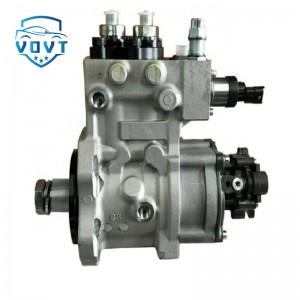
Diesel Injector Pump 612600080674 for WEICHAI S...
-
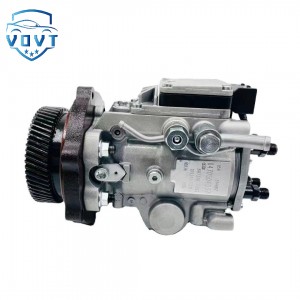
Diesel Injector Pump 0 440 020 028 0440020028 F...
-

Diesel Fuel Injection Pump 0 445 010 533 044501...
-

Diesel Fuel Injection Pump 101402-9632 Engine A...
-

Hot Selling Common Rail Diesel Fuel Injection U...
-

Diesel Fuel Injection Pump 150-2507 7C-4567 Eng...


