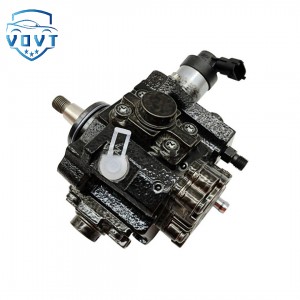
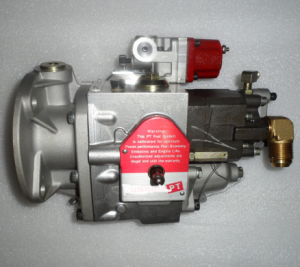
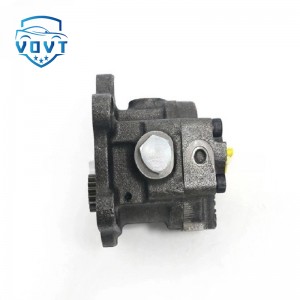
Diesel Fuel Injection Pump 4089431 Engine Auto Engine Part


products description
| Reference Code | 4089431 |
| MOQ | 1 PCS |
| Certification | ISO9001 |
| Place of Origin | China |
| Packaging | Neutral packing |
| Quality Control | 100% tested before shipment |
| Lead time | 7~15 working days |
| Payment | T/T, Western Union, Money Gram, Paypal, Alipay, Wechat |
Internal Lubrication Mechanism and Friction Control in Diesel High-Pressure Fuel Pumps
In a diesel high-pressure fuel pump, internal lubrication is fundamental to maintaining durability and operational stability. Unlike conventional mechanical systems that use dedicated lubricating oil, most diesel high-pressure pumps rely on the fuel itself to provide lubrication. This design requires precise engineering to balance sealing, friction reduction, and wear resistance.
The plunger and barrel assembly is one of the most critical friction pairs inside the pump. During operation, the plunger reciprocates at high frequency under heavy load, generating intense contact pressure. A thin fuel film forms between the plunger surface and the barrel bore, creating hydrodynamic lubrication. Maintaining this film is essential to prevent direct metal-to-metal contact.
Fuel viscosity plays a significant role in lubrication performance. Higher viscosity improves film thickness but may increase flow resistance. Lower viscosity reduces drag but weakens sealing capability. Therefore, the internal clearance between plunger and barrel must be carefully controlled to support both lubrication stability and compression efficiency.
Cam and tappet interfaces are additional high-load areas. Surface hardening treatments and optimized contact geometry help distribute stress and reduce wear. Proper alignment ensures that side forces remain minimal, preventing uneven surface degradation over time.
Internal fuel passages are designed not only for flow delivery but also for heat removal. Continuous circulation carries away friction-generated heat, helping to maintain dimensional stability of precision components. Excessive temperature rise can reduce fuel lubricity and accelerate wear.
Contamination is a major threat to lubrication performance. Microscopic particles suspended in fuel can disrupt the lubrication film and cause abrasive damage. High-quality filtration is therefore critical to protecting internal pump components.
Material selection also influences long-term reliability. High-strength alloy steels combined with advanced surface finishing reduce friction coefficients and enhance fatigue resistance under cyclic stress.
In summary, internal lubrication within diesel high-pressure fuel pumps is a carefully balanced system involving fuel properties, precision clearances, surface treatments, and structural design. Effective friction control ensures stable pressure generation, improved durability, and extended service life under demanding operating conditions.