
Diesel Fuel Injection Pump 094000-0570 Engine Auto Engine Part


products description
| Reference Code | 094000-0570 |
| MOQ | 1 PCS |
| Certification | ISO9001 |
| Place of Origin | China |
| Packaging | Neutral packing |
| Quality Control | 100% tested before shipment |
| Lead time | 7~15 working days |
| Payment | T/T, Western Union, Money Gram, Paypal, Alipay, Wechat |
Fuel Pulsation Control and Pressure Stability Optimization in Diesel High-Pressure Pumps
Diesel high-pressure fuel pumps are responsible for delivering compressed fuel to the injection system under precisely controlled conditions. While pressure generation is their primary function, maintaining stable output without excessive pulsation is equally critical for system performance.
During pump operation, the reciprocating plunger compresses fuel in cyclic motion. Each compression stroke generates a pressure wave that travels through the high-pressure line or common rail. If these pressure waves are not properly managed, they can cause pulsation, leading to unstable injection behavior.
Fuel pulsation originates from the intermittent nature of mechanical compression. As the plunger reaches peak stroke, pressure rises sharply. When discharge occurs, pressure momentarily drops before the next compression cycle begins. This fluctuation creates oscillations within the fuel system.
To minimize pulsation, modern high-pressure pumps incorporate damping strategies. One common approach involves optimizing plunger timing and cam profile design to smooth pressure rise rates. Gradual pressure build-up reduces shock intensity and stabilizes downstream flow.
The delivery valve also plays an important role in pulsation control. A properly designed valve closes quickly after discharge, preventing backflow and preserving residual pressure in the system. Maintaining residual pressure reduces the amplitude of pressure oscillations between cycles.
In common rail systems, the rail itself acts as a pressure accumulator. Its internal volume absorbs pulsation energy and distributes fuel more evenly to injectors. The coordination between pump output characteristics and rail volume is essential for achieving stable system pressure.
Excessive pulsation may affect injection timing accuracy and fuel quantity control. It can also increase mechanical stress on components and generate unwanted noise. Therefore, pump structural rigidity and internal flow channel optimization contribute to vibration and pulsation reduction.
Fuel properties, including viscosity and compressibility, further influence pulsation behavior. Variations in temperature can change fuel dynamics, requiring adaptive pressure control strategies.
In summary, effective pulsation control is fundamental to maintaining pressure stability in diesel high-pressure fuel pumps. Optimized mechanical design, valve response, and system integration ensure smooth and reliable fuel delivery under varying engine conditions.
Products categories
-

Diesel Fuel Injection Pump 0 445 010 019 Engin...
-

High Pressure Common Rail Fuel Injection Pump 0...
-
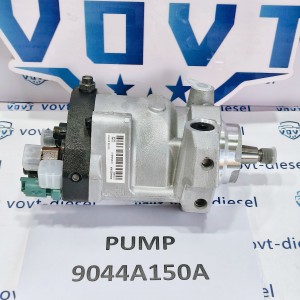
Diesel Fuel Injection Pump 9044A150A Engine Aut...
-

Diesel Fuel Injection VE Pump 0460426369 0 460 ...
-

Diesel Injection Pump 294000-2700 Common Rail H...
-
Fuel Pump 292-3751 2923751 for CAT Engine CAT S...


