
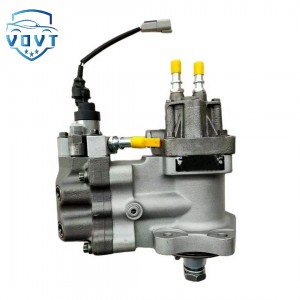
Diesel Fuel Injection Pump 0 460 424 302 VE4/12F1100L995 Engine Auto Engine Part


products description
| Reference Code | 0 460 424 302 |
| MOQ | 1 PCS |
| Certification | ISO9001 |
| Place of Origin | China |
| Packaging | Neutral packing |
| Quality Control | 100% tested before shipment |
| Lead time | 7~15 working days |
| Payment | T/T, Western Union, Money Gram, Paypal, Alipay, Wechat |
Internal Recirculation Control and Energy Loss Optimization in Diesel Fuel Pumps
In diesel fuel pumps, not all pressurized fuel is delivered to the injection system. A portion of the fuel circulates internally for lubrication, cooling, and pressure regulation. While this internal recirculation is necessary, excessive or poorly controlled flow can lead to energy loss and reduced system efficiency.
Internal recirculation occurs through designed leakage paths, clearances, and return channels. Fuel flowing through these paths helps lubricate moving components such as the plunger and cam interface, while also removing heat generated during high-pressure operation. However, this circulating fuel does not contribute directly to useful output, making it a source of efficiency loss.
The challenge in pump design is to balance functional recirculation with minimal energy waste. If internal leakage is too high, a significant portion of the pump’s mechanical work is dissipated without contributing to pressure generation. This not only reduces volumetric efficiency but also increases fuel temperature due to repeated compression and circulation.
Control of internal clearances is a key factor in managing recirculation. Precision machining ensures that leakage paths remain within designed limits. Small clearances support effective sealing while still allowing a thin lubrication film to form between moving surfaces.
Return flow channels must also be optimized. Smooth and well-directed flow paths reduce turbulence and prevent unnecessary pressure drop within the pump. Efficient channel design ensures that returning fuel exits the system with minimal resistance.
Material selection and surface finishing influence friction and leakage behavior. Low-friction surfaces reduce energy loss during movement, while wear-resistant materials maintain stable clearances over time. As components wear, increased gaps can lead to higher recirculation rates and declining efficiency.
Fuel temperature and viscosity also impact recirculation characteristics. Lower viscosity fuel flows more easily through leakage paths, increasing internal loss. Therefore, maintaining appropriate operating temperature helps stabilize pump performance.
In summary, internal recirculation is a necessary but controllable aspect of diesel fuel pump operation. By optimizing clearance design, flow paths, and material properties, energy loss can be minimized while maintaining reliable lubrication and cooling functions.
Products categories
-

High Quality New Fuel Injection Pump BH4AD95R D...
-

High Performance Diesel Fuel Injection Pump 0 4...
-

Diesel Fuel Injection Pump BHF6P120005 10113067...
-

Hot Selling Common Rail Diesel Fuel Injection U...
-
3975375 Fuel Injection Pump fits for Cummins QS...
-

High Pressure Fuel Injection Pump 131017951 for...


