
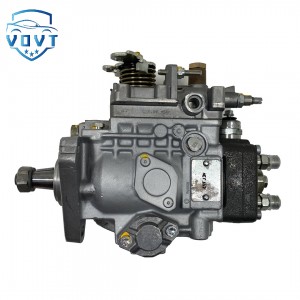
Diesel Fuel Injection Pump 0 460 414 235 VE4/11F1250L1031 Engine Auto Engine Part


products description
| Reference Code | 0 460 414 235 |
| MOQ | 1 PCS |
| Certification | ISO9001 |
| Place of Origin | China |
| Packaging | Neutral packing |
| Quality Control | 100% tested before shipment |
| Lead time | 7~15 working days |
| Payment | T/T, Western Union, Money Gram, Paypal, Alipay, Wechat |
Pressure Build-Up Mechanism and Volumetric Efficiency Control in Diesel Fuel Pumps
The diesel fuel pump is responsible for generating the high pressure required to deliver fuel to the injection system. Its ability to build pressure rapidly and maintain stable volumetric efficiency directly influences engine performance, combustion quality, and fuel economy.
Pressure generation in a diesel fuel pump is achieved through a reciprocating plunger mechanism. As the plunger moves upward within the pump barrel, the fuel chamber volume decreases, causing fuel pressure to rise sharply. Once the pressure exceeds the delivery valve threshold, fuel flows toward the injector or common rail system.
The speed of pressure build-up depends on plunger diameter, stroke length, and cam profile. A larger plunger diameter increases displacement volume, while stroke length determines the total fuel quantity per cycle. The cam design controls plunger acceleration, affecting how quickly pressure rises during each pumping event.
Volumetric efficiency refers to the ratio between theoretical displacement and actual delivered fuel volume. Internal leakage between the plunger and barrel reduces effective fuel output, especially under high-pressure conditions. Precise manufacturing tolerances are essential to minimize leakage while allowing sufficient lubrication.
Fuel compressibility also influences pressure formation. During initial plunger movement, part of the displacement energy is absorbed by fuel compression before pressure reaches the required threshold. This effect becomes more significant at higher pressures, requiring optimized chamber geometry to improve efficiency.
Delivery valve performance plays an important role in maintaining volumetric efficiency. A well-designed valve prevents backflow after fuel discharge and ensures stable pressure retention in the high-pressure line. Poor sealing or delayed closing may cause pressure fluctuations and inconsistent injection timing.
Temperature variations further affect pump performance. Increased fuel temperature reduces viscosity, increasing internal leakage and lowering volumetric efficiency. Therefore, thermal management is important in maintaining stable pump operation.
In conclusion, diesel fuel pump performance depends on the balance between rapid pressure generation and controlled volumetric efficiency. Careful optimization of plunger design, sealing precision, and valve function ensures reliable high-pressure fuel delivery under varying engine conditions.
Products categories
-
0 460 424 298 Diesel Fuel Injection Pump 046042...
-

Diesel Fuel Injection Pump 319-0676 Engine Auto...
-

Diesel Fuel Injection Pump BHF6P120005 10113067...
-

High Efficiency Fuel Injection Pump 1 465 134 7...
-

0 460 414 169 Diesel Injection Pump for Bosch F...
-

Original Common Rail Diesel Fuel Injection Pump...


