
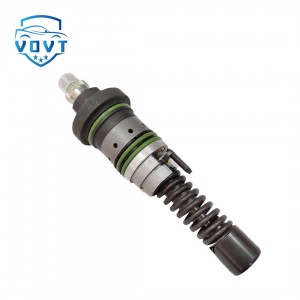
Diesel Fuel Injection Pump 0 445 010 533 0445010533 Engine Auto Engine Part


products description
| Reference Code | 0 460 424 211 |
| MOQ | 1 PCS |
| Certification | ISO9001 |
| Place of Origin | China |
| Packaging | Neutral packing |
| Quality Control | 100% tested before shipment |
| Lead time | 7~15 working days |
| Payment | T/T, Western Union, Money Gram, Paypal, Alipay, Wechat |
Performance Optimization of Engine Oil Pumps under Cold Start Conditions
Cold start operation is one of the most critical phases in the service life of an internal combustion engine. At low ambient temperatures, engine oil viscosity increases significantly, leading to poor flowability, delayed lubrication, and elevated mechanical friction. As the core component responsible for supplying lubricating oil, the engine oil pump plays a vital role in ensuring reliable lubrication during cold start conditions. Therefore, optimizing oil pump performance under low-temperature environments is essential for improving engine durability and reducing wear.
One of the primary challenges faced by oil pumps during cold start is the sharp rise in hydraulic resistance caused by high-viscosity oil. This condition increases pump load, reduces volumetric efficiency, and may result in insufficient oil delivery to critical engine components such as crankshaft bearings and camshaft interfaces. Experimental studies have shown that excessive pressure buildup at the pump outlet can also trigger frequent opening of pressure relief valves, leading to unnecessary energy losses and unstable oil supply.
To address these issues, structural optimization of oil pumps has proven to be an effective approach. Improving internal flow passages by reducing sharp turns and optimizing clearances can significantly decrease flow resistance during cold start. In addition, adopting variable displacement oil pump designs allows the pump to automatically adjust its output according to engine speed and lubrication demand. During cold start, such pumps can provide higher initial flow rates to shorten lubrication delay, while reducing displacement once stable lubrication is achieved.
Material selection and surface treatment are also important factors in cold-start performance optimization. The use of low-friction coatings on pump gears or rotors can reduce mechanical losses under high-viscosity conditions. Furthermore, enhanced wear-resistant materials help maintain stable clearances despite increased friction during low-temperature operation, ensuring consistent pump efficiency over long service periods.
From a control perspective, integrating oil pump operation with engine electronic control systems offers additional optimization potential. By coordinating oil pump output with engine temperature signals, intelligent control strategies can prevent excessive pressure buildup while ensuring sufficient oil supply. For example, delaying pressure relief valve activation during the initial cold start phase can improve oil delivery to critical lubrication points.
In conclusion, optimizing engine oil pump performance under cold start conditions requires a comprehensive approach combining structural design improvements, material enhancement, and intelligent control strategies. Such optimization not only reduces startup wear and mechanical losses but also contributes to improved fuel efficiency and extended engine service life, making it increasingly important for modern high-efficiency engines operating in cold climates.
Products categories
-

New Diesel Fuel Injection Pump 0460413001 Engin...
-
Hot Selling Diesel Fuel Unit Pump 02112860 for ...
-

Diesel Fuel Injection Pump 294000-0039 Engine A...
-
Diesel Fuel Injection Pump16010BH001 For FOTON ...
-
High Quality HP3 High Pressure Pump 294000-2690...
-

Diesel Fuel Injection Pump 4P-5727 4P-5728 4W-6...


