
Common Rail Injector Pump Resistance-Capacitance-Inductance Tester LCR02 Digital Bridge Solenoid Electromagnetic


products description
| Reference. Codes | ISO9001 |
| MOQ | 1PCS |
| Certification | ISO9001 |
| Place of Origin | China |
| Packaging | Neutral packing |
| Quality Control | 100% tested before shipment |
| Lead time | 7~10 working days |
| Payment | T/T, L/C, Paypal, Western Union, MoneyGram or as your requirement |
are increasingly playing an important role in equipment maintenance, on-site inspection, and quality control.
With the rapid development of modern industry and intelligent manufacturing, compact and portable testing instruments are increasingly playing an important role in equipment maintenance, on-site inspection, and quality control. Compared with traditional large-scale laboratory equipment, small testing instruments offer significant advantages in terms of portability, flexibility, and real-time measurement capability.
A compact testing instrument is typically characterized by small size, lightweight structure, low power consumption, and easy operation. It usually integrates sensing modules, signal processing units, data acquisition systems, and human–machine interfaces into a highly integrated structure. Common testing functions include pressure measurement, temperature monitoring, flow detection, vibration analysis, and electrical parameter testing. By using high-precision sensors and embedded microcontrollers, these instruments can achieve fast response and reliable data output.
In practical applications, portable testing instruments are widely used in fields such as automotive maintenance, fuel system diagnosis, hydraulic equipment testing, and industrial process monitoring. For example, in fuel injection system diagnostics, a compact pressure testing instrument can be directly connected to the fuel rail to measure real-time pressure fluctuations, helping engineers quickly identify injector blockage, pump wear, or control valve failure. In vibration monitoring, small portable analyzers are used to detect early faults in rotating machinery, significantly reducing the risk of unexpected shutdowns.
Another important advantage of compact testing instruments is their excellent adaptability to harsh working environments. Through the use of protective housings, anti-interference circuits, and wide-temperature electronic components, these devices can operate stably under conditions of high humidity, strong vibration, and large temperature variations. Meanwhile, wireless communication technologies such as Bluetooth and Wi-Fi enable real-time data transmission to computers or mobile terminals, which greatly improves testing efficiency.
With the integration of digital signal processing and intelligent algorithms, modern small testing instruments are gradually evolving toward intelligent and multifunctional systems. Data storage, automatic calibration, fault diagnosis, and cloud-based data management are becoming standard functions. In the future, with the continuous advancement of microelectronics and sensor technology, compact testing instruments will further develop toward higher accuracy, lower power consumption, and stronger intelligence, providing more efficient technical support for industrial testing and equipment health management.
Products categories
-
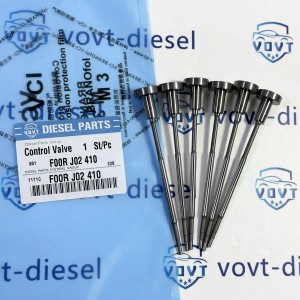
High Precision New Diesel Injector Control Valv...
-

New High Quality Diesel Injector 2W-5201 6I-435...
-

High Quality Diesel Fuel Injector 095000-1090 A...
-

New High Quality Diesel Nozzle DLLA154PN0171 fo...
-
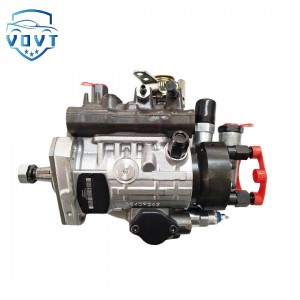
Hot-Selling Fuel Injection Pump 3230F580T Commo...
-

New Common Rail Fuel Injector F00RJ01683 Contro...


