
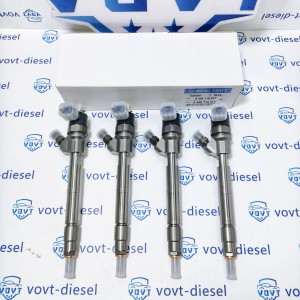
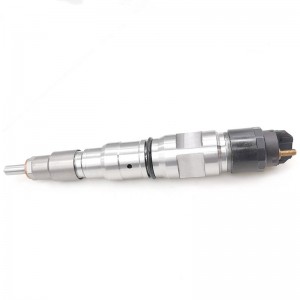
Professional Manufacture KDAL59P42 Diesel Injector Common Rail Injector Engine Parts Vehicle Parts


products description
| Reference. Codes | KDAL59P42 |
| Application | / |
| MOQ | 4PCS |
| Certification | ISO9001 |
| Place of Origin | China |
| Packaging | Neutral packing |
| Quality Control | 100% tested before shipment |
| Lead time | 7~10 working days |
| Payment | T/T, L/C, Paypal, Western Union, MoneyGram or as your requirement |
Effect of Internal Leakage Paths on Energy Efficiency and Control Accuracy of Fuel Injectors
Fuel injectors are designed to deliver fuel with high precision while operating under extremely high pressure. In addition to the main injection flow, small internal leakage paths exist within the injector structure. Although these leakage flows are often considered unavoidable, their influence on injector efficiency and control accuracy is significant.
Internal leakage occurs through microscopic clearances between moving components, such as the needle guide, control valve interfaces, and sealing surfaces. These leakage paths allow fuel to flow back into low-pressure regions during and after injection. While a certain level of leakage is necessary for lubrication and cooling, excessive leakage leads to energy loss and pressure instability.
From an energy efficiency perspective, leakage flow represents wasted hydraulic energy. Fuel pressurized by the high-pressure pump is partially lost through internal leakage instead of contributing to effective injection. As injection pressure increases, leakage flow generally rises, reducing overall system efficiency and increasing pump load.
Internal leakage also affects injector control accuracy. During injection events, leakage alters the pressure balance inside control chambers, influencing needle motion. Variations in leakage rate can change opening delay, needle lift speed, and closing behavior. These effects are especially critical during short injection pulses, where small pressure differences have a large impact on injected fuel quantity.
Leakage behavior is highly sensitive to component wear and temperature. As injector components wear over time, clearances increase, resulting in higher leakage flow. Temperature changes affect fuel viscosity and component expansion, further influencing leakage characteristics. These variations contribute to performance drift during long-term operation.
To manage internal leakage, injector design must carefully optimize clearance sizes and surface finishes. Advanced manufacturing techniques are used to achieve stable leakage levels that balance lubrication requirements and efficiency. In addition, injector testing often includes leakage rate measurement as a key performance indicator.
In conclusion, internal leakage paths play a crucial role in determining injector energy efficiency and control precision. Understanding and managing leakage behavior is essential for improving injector performance, reducing energy losses, and maintaining stable injection characteristics over the service life.
Related products
| 1 | 5WS40200 | 11 | A2C59514909/ | 21 | 31336585 |
| 2 | FA2C53252642 | 12 | A2C59511602 | 22 | 36001726 |
| 3 | 1685796 | 13 | A2C59513556 | 23 | 1709667 |
| 4 | 31303994 | 14 | 5ws40677 | 24 | 36001727 |
| 5 | 50274V05 | 15 | 50274V0 | 25 | 9445R |
| 6 | 5WS40087 | 16 | 5WS40677 | 26 | 00Q1T |
| 7 | 16600-00Q1T | 17 | AV6Q9F593-AB | 27 | 5WS40007 |
| 8 | 00Q0H | 18 | AV6Q9F593-AA | 28 | A2C59513997 |
| 9 | 5WS40148-Z | 19 | A2C59511606 | 29 | 5WS40250 |
| 10 | 2S6Q-9F593-AB | 20 | 16600-00Q0P | 30 | A2C59514912 |
Products categories
-

High Quality Diesel Injector 0445120048 0 445 1...
-

Professional Manufacture 0 414 701 083 Diesel I...
-
Professional Manufacture 0 445 110 317 Diesel I...
-

High Quality New Diesel Injector 0445110646 Com...
-

Cost-Effective Common Rail Injector 0 445 110 5...
-
Re-Manufactured Diesel Fuel Injector 095000-973...


