
Professional Manufacture 0 445 110 768 Diesel Injector Common Rail Injector Engine Parts Vehicle Parts 0445110768


products description
| Reference. Codes | 0 445 110 768 |
| Application | / |
| MOQ | 4PCS |
| Certification | ISO9001 |
| Place of Origin | China |
| Packaging | Neutral packing |
| Quality Control | 100% tested before shipment |
| Lead time | 7~10 working days |
| Payment | T/T, L/C, Paypal, Western Union, MoneyGram or as your requirement |
Joint Simulation Approach for Injector Dynamic Response Based on AMESim and MATLAB
Fuel injector performance is strongly influenced by its dynamic response during opening and closing. Fast and stable response is required to ensure accurate fuel delivery, especially under high-speed engine operation. Because injector behavior involves multiple physical processes, a joint simulation approach using AMESim and MATLAB is often adopted to analyze and improve injector dynamics efficiently.
In this co-simulation method, AMESim is mainly used to build the physical injector model. The model typically includes hydraulic flow paths, mechanical moving parts, and electromagnetic components. AMESim allows these subsystems to be connected in a unified environment, making it possible to simulate needle movement, pressure variation, and flow rate changes during the injection event. The physical behavior of the injector can therefore be observed in detail without performing complex experiments.
MATLAB plays a complementary role by handling control logic and parameter adjustment. Injector drive signals, such as current profiles or pulse widths, are created in MATLAB and sent to the AMESim model. Based on these inputs, AMESim calculates the injector response and feeds the results back to MATLAB. This information exchange enables engineers to quickly evaluate how different control parameters influence injector performance.
One advantage of this joint simulation approach is the ease of parameter tuning. Control strategies can be modified directly in MATLAB without rebuilding the physical model in AMESim. This makes it convenient to test different injection strategies, such as varying peak current levels or adjusting signal timing. The effects of these changes on response delay, needle stability, and injection duration can be clearly observed.
The co-simulation method also helps engineers identify practical performance issues, such as response lag or unwanted oscillations. By analyzing simulation results, potential causes can be traced to either physical design or control strategy. This supports targeted improvements in both injector structure and electronic control.
In summary, the AMESim–MATLAB joint simulation method provides a flexible and efficient tool for studying injector dynamic response. By combining detailed physical modeling with convenient control parameter adjustment, this approach supports injector design optimization and reduces development time. It is especially useful in early-stage development and control strategy validation for modern fuel injection systems.
Related products
| 1 | 5WS40200 | 11 | A2C59514909/ | 21 | 31336585 |
| 2 | FA2C53252642 | 12 | A2C59511602 | 22 | 36001726 |
| 3 | 1685796 | 13 | A2C59513556 | 23 | 1709667 |
| 4 | 31303994 | 14 | 5ws40677 | 24 | 36001727 |
| 5 | 50274V05 | 15 | 50274V0 | 25 | 9445R |
| 6 | 5WS40087 | 16 | 5WS40677 | 26 | 00Q1T |
| 7 | 16600-00Q1T | 17 | AV6Q9F593-AB | 27 | 5WS40007 |
| 8 | 00Q0H | 18 | AV6Q9F593-AA | 28 | A2C59513997 |
| 9 | 5WS40148-Z | 19 | A2C59511606 | 29 | 5WS40250 |
| 10 | 2S6Q-9F593-AB | 20 | 16600-00Q0P | 30 | A2C59514912 |
Products categories
-
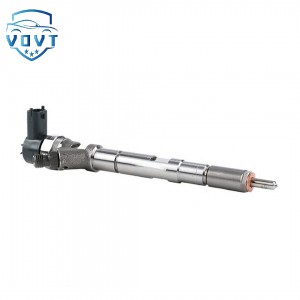
Professional Manufacturing 0 445 110 524 Diesel...
-

Professional Manufacture 0 445 120 479 Diesel I...
-
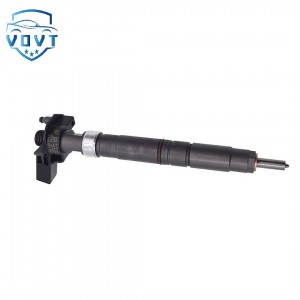
High Quality Diesel injector 0 445 115 064 0445...
-

Professional Manufacture 0 432 191 259 Diesel I...
-

Professional Manufacture 0 445 120 250 Diesel I...
-

Good Quality Common Fuel Injector 0445110186 0 ...


