
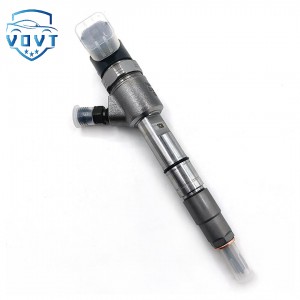
Professional Manufacture 0 414 701 083 Diesel Injector Common Rail Injector Engine Parts Vehicle Parts 0414701083


products description
| Reference. Codes | 0 414 701 083 |
| Application | / |
| MOQ | 4PCS |
| Certification | ISO9001 |
| Place of Origin | China |
| Packaging | Neutral packing |
| Quality Control | 100% tested before shipment |
| Lead time | 7~10 working days |
| Payment | T/T, L/C, Paypal, Western Union, MoneyGram or as your requirement |
Influence of Internal Cleanliness on the Performance of Fuel Injectors
Internal cleanliness is a critical but often underestimated factor affecting the performance and reliability of fuel injectors. Modern injectors operate with extremely small clearances and precise moving components, making them highly sensitive to micro-scale contamination. Even very small particles can cause noticeable changes in injector behavior.
Fuel injectors contain several precision interfaces, such as the needle-to-guide clearance, control valve passages, and internal flow channels. When solid particles enter these areas, they can interfere with smooth component movement. This may lead to increased friction, delayed needle response, or unstable valve operation. As a result, injection timing and fuel quantity accuracy may be affected.
Micro-particle contamination can originate from multiple sources. These include fuel impurities, wear debris from upstream components, and particles introduced during injector assembly or maintenance. Over time, particles may accumulate inside the injector, especially in low-flow regions, increasing the risk of blockage or sticking.
One common effect of poor internal cleanliness is injection inconsistency. Particles trapped between moving parts can temporarily alter clearances, causing cycle-to-cycle variations in needle motion. This inconsistency is particularly noticeable during small injection events, such as pilot injections, where precise control is required.
In addition to mechanical effects, contamination also influences internal flow behavior. Partial blockage of small orifices or control passages changes pressure distribution inside the injector. This can lead to abnormal pressure fluctuations, affecting injection stability and repeatability.
Maintaining high cleanliness standards during injector manufacturing and assembly is essential. Clean-room environments, filtered assembly air, and strict cleaning procedures help minimize contamination risks. During maintenance, proper handling and thorough cleaning of components are equally important.
Fuel filtration also plays a key role in protecting injectors during operation. High-efficiency fuel filters help prevent particles from entering the injector and reduce long-term contamination buildup. Regular filter replacement contributes directly to injector reliability.
In summary, internal cleanliness has a significant impact on injector performance, stability, and service life. Controlling contamination through proper manufacturing, maintenance, and filtration practices is essential for ensuring reliable and precise fuel injection in modern engine systems.
Related products
| 1 | 5WS40200 | 11 | A2C59514909/ | 21 | 31336585 |
| 2 | FA2C53252642 | 12 | A2C59511602 | 22 | 36001726 |
| 3 | 1685796 | 13 | A2C59513556 | 23 | 1709667 |
| 4 | 31303994 | 14 | 5ws40677 | 24 | 36001727 |
| 5 | 50274V05 | 15 | 50274V0 | 25 | 9445R |
| 6 | 5WS40087 | 16 | 5WS40677 | 26 | 00Q1T |
| 7 | 16600-00Q1T | 17 | AV6Q9F593-AB | 27 | 5WS40007 |
| 8 | 00Q0H | 18 | AV6Q9F593-AA | 28 | A2C59513997 |
| 9 | 5WS40148-Z | 19 | A2C59511606 | 29 | 5WS40250 |
| 10 | 2S6Q-9F593-AB | 20 | 16600-00Q0P | 30 | A2C59514912 |
Products categories
-

Made in China Common Rail Injector Fuel Injecto...
-
High Quality Diesel injector 0 445 110 376 0445...
-

Professional Manufacture 0 445 110 307 Diesel I...
-

Cost-Effective New Fuel Injector 0 445 110 049 ...
-

High Quality New Diesel Injector 0445110646 Com...
-
28229873 CRDI Fuel Diesel Injector 33800 4A710 ...


