
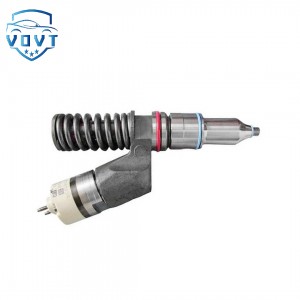
New High Quality Made in China Diesel Injector 127-8222 1278222 For CAT


Products Description
| Reference. Codes | 127-8222 |
| Application | 7W7026 |
| MOQ | 4PCS |
| Certification | ISO9001 |
| Place of Origin | China |
| Packaging | Neutral packing |
| Quality Control | 100% tested before shipment |
| Lead time | 7~10 working days |
| Payment | T/T, L/C, Paypal, Western Union, MoneyGram or as your requirement |
Multiple Injection Strategy and Combustion Optimization in Diesel Fuel Injectors
Modern diesel fuel injectors are designed not only to deliver fuel under extremely high pressure, but also to support multiple injection events within a single combustion cycle. This capability plays a crucial role in optimizing combustion efficiency, reducing emissions, and controlling engine noise.
Multiple injection strategy divides the total fuel quantity into several smaller injection events, such as pilot injection, main injection, and post injection. Each phase serves a specific purpose in the combustion process. The injector must respond rapidly and precisely to execute these closely timed pulses.
Pilot injection occurs before the main injection and introduces a small amount of fuel into the combustion chamber. This initial combustion slightly raises temperature and pressure, reducing ignition delay for the main injection. As a result, combustion becomes smoother, lowering noise and mechanical stress.
The main injection delivers the majority of the fuel required for power generation. Its timing and duration directly influence engine torque and fuel efficiency. Accurate control ensures optimal mixing between fuel and compressed air, promoting complete combustion.
Post injection may occur after the main combustion phase. It is often used to control emissions, particularly particulate matter. By introducing additional fuel at a controlled timing, exhaust temperature can be managed to support after-treatment systems.
Executing multiple injections requires precise control of injector needle movement and hydraulic pressure dynamics. Each injection event must be clearly separated to prevent overlap. Rapid opening and closing response is essential, especially at high engine speeds where available time per cycle is limited.
Pressure stability within the common rail system also affects injection consistency. Fluctuations may alter injection quantity and timing accuracy. Therefore, injector design must coordinate closely with pressure regulation components.
In summary, multiple injection capability significantly enhances diesel engine performance and emission control. The injector’s ability to deliver accurately timed and controlled fuel pulses is fundamental to achieving efficient and stable combustion.
Products categories
-

New High Quality Diesel Injector 292-3666 20R-8...
-
High Quality New Diesel Injector 317-5278 31752...
-

Diesel Fuel Injector Common Rail Injector 235-2...
-

High Quality Diesel Fuel Injector 236-1674 Comm...
-

New High Quality Diesel Injector 7C-4184 0R-090...
-

New High Quality Diesel Injector 293-4072 293-4...


