
New High Quality Diesel Injector 7W7026 For CAT


Products Description
| Reference. Codes | 7W7026 |
| Application | 7W7026 |
| MOQ | 4PCS |
| Certification | ISO9001 |
| Place of Origin | China |
| Packaging | Neutral packing |
| Quality Control | 100% tested before shipment |
| Lead time | 7~10 working days |
| Payment | T/T, L/C, Paypal, Western Union, MoneyGram or as your requirement |
Response Time and Dynamic Control Accuracy of Fuel Injectors
Fuel injectors play a critical role in modern engine performance by delivering precise quantities of fuel at exact moments. Among the many performance indicators of an injector, response time and dynamic control accuracy are particularly important for achieving efficient combustion and low emissions.
Response time refers to how quickly the injector can open and close after receiving a control signal. In electronically controlled systems, this process involves electrical activation, magnetic force generation, mechanical movement of the needle, and hydraulic pressure changes. Each stage contributes to the total delay between command and fuel delivery.
A shorter response time allows more accurate control of injection timing, especially at high engine speeds. When engine speed increases, the available time for each injection event decreases significantly. If injector response is slow, the actual injection timing may deviate from the desired schedule, affecting combustion efficiency.
Dynamic control accuracy is closely related to repeatability. An injector must deliver nearly identical fuel quantities for each cycle under the same operating conditions. Variations in needle motion, fuel pressure, or control signal stability can introduce deviations in injected volume. Even small inconsistencies may result in uneven combustion between cylinders.
Hydraulic dynamics inside the injector strongly influence response behavior. The rate of pressure change in control chambers determines how quickly the needle lifts and reseats. Optimized internal flow paths help reduce hydraulic delay and improve consistency in needle movement.
Electrical characteristics also affect performance. Coil resistance, inductance, and control signal waveform determine how rapidly magnetic force builds and collapses. Advanced control strategies, such as precise current shaping, help improve injector speed and stability.
Over time, wear and contamination can degrade response performance. Increased friction or altered internal clearances may slow needle motion and reduce dynamic accuracy. Proper maintenance and high manufacturing precision are therefore essential for long-term reliability.
In conclusion, response time and dynamic control accuracy are fundamental to injector performance. Optimizing mechanical, hydraulic, and electrical characteristics ensures precise fuel delivery and stable engine operation under diverse conditions.
Products categories
-

Diesel Fuel Injector 2057401 for Scania DC09 DC...
-
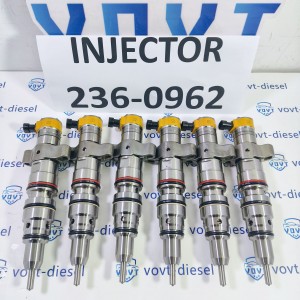
New High Quality Diesel Injector 236-0962 23609...
-

New High Quality Diesel Injector 153-2875 191-3...
-

New High Quality Diesel Injector 150-4453 162-8...
-

Top Quality Fuel injector Assembly Diesel Commo...
-

High Quality Diesel Fuel Injector 320D 326-4700...


