
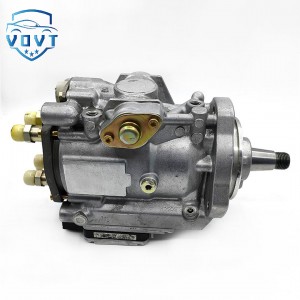
Hot Selling Common Rail Diesel Fuel Injection Unit Pump 0 414 693 005 Engine Parts 0414693005


products description
| Reference Code | 0 414 693 005 |
| Application | Deutz |
| MOQ | 1PCS |
| Certification | ISO9001 |
| Place of Origin | China |
| Packaging | Neutral packing |
| Quality Control | 100% tested before shipment |
| Lead time | 7~10 working days |
| Payment | T/T, L/C, Paypal, Western Union, MoneyGram or as your requirement |
Dynamic Fuel Delivery Characteristics and Cycle Stability of Unit Pumps
Unit pumps are widely used in diesel fuel injection systems where precise control of fuel delivery is required. Unlike centralized pumping systems, a unit pump generates high pressure individually for each cylinder, making its dynamic fuel delivery behavior closely linked to engine operating cycles.
During operation, the unit pump plunger is driven by a cam mechanism that produces periodic compression of fuel. This cyclic motion results in a highly dynamic pressure profile within the pump chamber. The shape of the pressure curve depends on cam profile, plunger speed, and internal leakage characteristics.
Cycle-to-cycle stability is an important performance indicator for unit pumps. Variations in plunger motion or fuel compressibility can cause differences in delivered fuel quantity between cycles. These variations may lead to uneven combustion and increased vibration in multi-cylinder engines.
Internal leakage plays a dual role in unit pump performance. A controlled level of leakage helps damp pressure fluctuations and improves pressure stability. However, excessive leakage reduces volumetric efficiency and weakens pressure build-up, leading to insufficient fuel delivery at high engine loads.
Fuel properties strongly influence dynamic behavior. Changes in fuel temperature affect viscosity and compressibility, altering the pressure rise rate inside the pump chamber. At low temperatures, higher viscosity increases flow resistance, while at high temperatures, reduced viscosity increases leakage, both affecting cycle stability.
Mechanical wear is another factor that influences dynamic performance. Wear of the plunger and barrel gradually increases clearance, modifying pressure generation characteristics over time. This can result in delayed pressure rise and reduced injection consistency.
To improve cycle stability, unit pump design focuses on optimizing cam profiles, plunger geometry, and leakage control. In addition, precise manufacturing and regular maintenance help maintain stable dynamic performance throughout the pump’s service life.
In summary, the dynamic fuel delivery characteristics of unit pumps play a crucial role in injection accuracy and engine stability. Understanding and controlling cycle-to-cycle behavior is essential for reliable and efficient fuel system operation.
Products categories
-

Diesel Fuel Injection Pump 299050-0021 Engine A...
-

Diesel Fuel Injection Pump BH4Q85R8 Engine Auto...
-

Diesel Fuel Injection Pump 294000-0560 Engine A...
-
High-Quality Diesel Fuel Injection Pump 09342-4...
-
High Quality HP3 High Pressure Pump 294000-2690...
-

Fuel Injection Pump 0445020122 0 445 020 122 fo...


