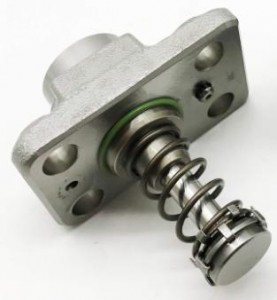
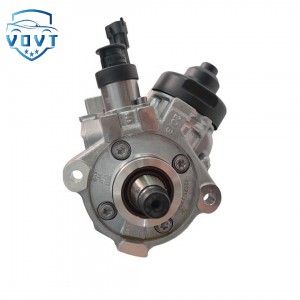
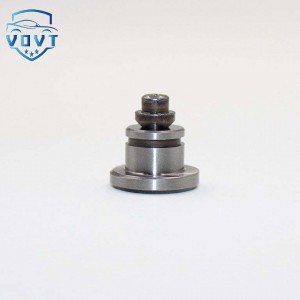
High Quality Repair Kit 0906-0112 Diesel Fuel Pump Repair Kit Engine Parts


products description
| Reference. Codes | 0906-0112 |
| OE/OEM Codes | / |
| Application | Fuel Pump |
| MOQ | 50 pcs |
| Certification | ISO9001 |
| Place of Origin | China |
| Packaging | Neutral packing |
| Quality Control | 100% tested before shipment |
| Lead time | 7~15 working days |
| Payment | T/T, L/C, Paypal, Western Union or as your requirement |
Performance Restoration and Reliability Evaluation of Fuel Pump Repair Kits
Abstract
Fuel pump repair kits are widely applied in automotive maintenance and remanufacturing to restore the performance of worn or aged pumps. However, the precision, material quality, and assembly tolerance of replacement components significantly influence the final performance of the repaired unit. This study investigates the performance restoration mechanism of fuel pump repair kits and evaluates the reliability of key components including sealing elements, springs, plungers, and valve assemblies. A combined methodology of material characterization, dimensional accuracy testing, hydraulic performance evaluation, and accelerated durability experiments is employed. The results provide technical guidance for the optimization of repair kit design and standardized maintenance procedures.
1. Introduction
High-pressure fuel pumps operate under harsh conditions involving elevated pressure, cyclic loading, sliding friction, and thermal variation. During long-term operation, critical components—such as sealing rings, delivery-valve springs, and plungers—experience wear, fatigue, and deformation, leading to pressure loss, fuel leakage, and unstable injection behavior. Fuel pump repair kits offer an economical way to extend pump service life by replacing these critical components without fully substituting the pump assembly.
However, differences in material grade, manufacturing precision, and assembly tolerance among aftermarket repair kits often result in inconsistent performance. Therefore, evaluating the restoration capability and long-term reliability of repair kits is essential for ensuring stable engine operation.
2. Structure and Function of a Fuel Pump Repair Kit
A typical repair kit includes:
-
Sealing components (O-rings, gaskets, sealing washers)
-
Spring components (delivery-valve spring, inlet-valve spring)
-
Plunger and barrel matching parts
-
Valve assemblies (ball valve, valve seat, retainer)
-
Fastening components (screws, clips, shims)
Each component directly affects fuel tightness, pressure buildup rate, flow stability, and overall pump efficiency. For example, the micro-scale clearance between the plunger and barrel determines volumetric efficiency, while sealing material performance governs leakage behavior under high pressure and temperature.
3. Methodology
3.1 Material Characterization
Key components from multiple repair kit brands were subjected to hardness testing, metallographic analysis, and chemical composition evaluation. Sealing elements were analyzed for thermal aging resistance and fuel-compatibility using immersion tests in diesel, biodiesel, and ethanol-blend fuels.
3.2 Dimensional Accuracy and Tolerance Testing
High-precision coordinate-measuring equipment (CMM) was used to assess geometric tolerances, surface roughness, and clearance uniformity, focusing on plunger-barrel pairs and valve-seat surfaces.
3.3 Pump Performance Evaluation
Repaired pumps were tested on a hydraulic bench to evaluate:
-
Pressure buildup capability
-
Flow-rate stability
-
Leakage rate
-
Delivery-valve dynamic response
-
Thermal decay behavior
3.4 Accelerated Durability Testing
Repaired pumps were subjected to 200-hour high-pressure cyclic loading to simulate real vehicle operation. Component wear was measured post-test to assess reliability.
4. Results and Discussion
4.1 Material Performance Variation
Significant differences were observed in the hardness consistency of plungers among aftermarket kits. Kits using low-grade alloy steel showed surface micro-cracks after durability tests, while nitrided or carburized plungers maintained stable hardness and wear resistance.
Sealing materials also exhibited large performance differences. FKM seals demonstrated minimal swelling (<3%) in biodiesel, whereas nitrile rubber exhibited severe deterioration.
4.2 Impact of Dimensional Accuracy
Repaired pumps assembled using high-precision plunger-barrel pairs recovered more than 95% of their original pressure capacity, while pumps with oversized clearances showed substantial leakage and unstable flow.
Valve-seat roughness strongly correlated with pressure oscillation amplitude. Poor machining quality led to delayed valve closing and increased pressure ripple.
4.3 Performance Restoration Evaluation
High-quality repair kits restored:
-
Pressure buildup: 92–97%
-
Flow stability: within ±3% fluctuation
-
Leakage rate: <0.5 mL/min
Lower-quality kits displayed inconsistent performance and rapid degradation during durability testing.
4.4 Durability Analysis
After 200 hours of cyclic load:
-
Springs with inadequate fatigue strength lost 12–18% stiffness
-
Low-quality seals developed micro-cracks and hardening
-
Poorly matched plunger-barrel pairs showed accelerated scuffing
Therefore, long-term reliability strongly depends on component materials and precise manufacturing.
5. Conclusion
This study demonstrates that the performance restoration capability of fuel pump repair kits highly depends on the material quality, dimensional accuracy, and assembly consistency of critical components. High-precision plunger-barrel pairs and high-grade sealing materials significantly improve pressure recovery, flow stability, and durability. To ensure reliability in aftermarket applications, repair kits should adopt stringent manufacturing tolerance controls, advanced surface treatment processes, and standardized installation procedures. The study provides technical references for future repair kit design and quality-assurance systems.
Keywords
Fuel pump; Repair kit; Sealing components; Plunger-barrel pair; Valve assembly; Durability; Performance restoration; Leakage behavior; Material reliability