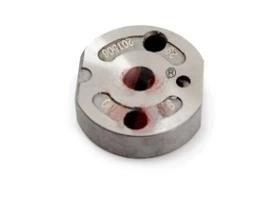
High Quality Fuel Rail Pressure Sensors A0061537828 Common Rail Pressure Sensor Spare part


Products Description
| Reference Codes | A0061537828 |
| Application | / |
| MOQ | 6 PCS |
| Certification | ISO9001 |
| Place of Origin | China |
| Packaging | Neutral packing |
| Quality Control | 100% tested before shipment |
| Lead time | 7~15 working days |
| Payment | T/T, L/C, Paypal, Western Union, MoneyGram or as your requirement |
Signal Conversion Principles and Accuracy Stability in Automotive Sensors
Automotive sensors are essential components in modern engine and vehicle control systems. Their primary function is to detect physical parameters such as pressure, temperature, position, or flow, and convert them into electrical signals that can be processed by the electronic control unit (ECU). The reliability of this signal conversion directly affects system performance and control precision.
The basic working principle of most automotive sensors involves transduction. A physical input, such as pressure or temperature, acts on a sensing element. This interaction causes a measurable change in electrical properties, including resistance, capacitance, voltage, or frequency. The internal circuitry then amplifies and conditions the signal to produce a stable output.
Signal conditioning is a critical stage in maintaining accuracy. Raw sensor signals are often small and susceptible to electrical noise. Amplification, filtering, and analog-to-digital conversion ensure that the output remains stable and interpretable by the control unit. Poor signal conditioning can result in inaccurate readings and unstable system behavior.
Accuracy stability depends on both mechanical and electrical design. The sensing element must maintain consistent physical characteristics under varying environmental conditions. Mechanical stress, vibration, and thermal expansion may alter the sensor structure, leading to drift or measurement deviation over time.
Temperature compensation is another important feature. Since most materials change electrical properties with temperature, sensors often incorporate compensation circuits to maintain measurement accuracy across a wide temperature range. Without compensation, signal errors would increase significantly in extreme conditions.
Long-term durability also affects signal reliability. Continuous exposure to vibration, humidity, and contaminants may degrade internal components. Proper sealing and protective materials help extend sensor service life and maintain stable performance.
Calibration is essential to ensure precision. During manufacturing, sensors are tested and adjusted to match defined output characteristics. Periodic system-level diagnostics can detect abnormal signal patterns and identify potential sensor failure.
In summary, automotive sensors rely on precise signal conversion and stable structural design to provide accurate data for vehicle control systems. Optimizing signal conditioning, temperature compensation, and durability ensures consistent performance in demanding operating environments.