
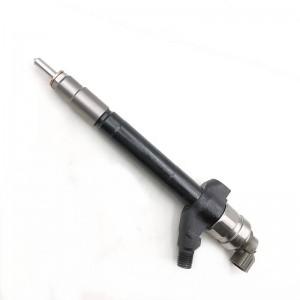
High Quality Diesel Fuel Injector 095000-8903 Auto Parts


Products Description
| Reference. Codes | 095000-8903 |
| Application | / |
| MOQ | 4PCS |
| Certification | ISO9001 |
| Place of Origin | China |
| Packaging | Neutral packing |
| Quality Control | 100% tested before shipment |
| Lead time | 7~10 working days |
| Payment | T/T, L/C, Paypal, Western Union, MoneyGram or as your requirement |
Corrosion Protection Technology of Marine Low-Speed Engine Injectors under High-Sulfur Fuel Conditions
Abstract
Marine low-speed engines widely operate on high-sulfur heavy fuel oil (HFO), where sulfur content, impurities, and poor fuel quality severely accelerate corrosion, wear, and blockage of injector components. Corrosive products such as sulfuric acid and sulfides formed during combustion and fuel storage significantly degrade injector nozzle surfaces, needle valves, and sealing interfaces, leading to poor atomization, unstable combustion, and increased fuel consumption. This study investigates the corrosion mechanism of marine injectors under high-sulfur fuel conditions and systematically proposes multi-level corrosion protection technologies including material selection, surface coatings, fuel treatment, and system-level control strategies. Experimental and field data demonstrate that the proposed protection methods effectively extend injector service life by over 45% and significantly improve fuel spray stability.
Keywords: Marine diesel engine, high-sulfur fuel, fuel injector, corrosion protection, surface coating, heavy fuel oil
1. Introduction
Marine low-speed diesel engines are the core power units for large ocean-going vessels and typically operate on high-sulfur heavy fuel oil due to its low cost and high energy density. However, sulfur contents may reach 2.5–3.5% or higher in certain regions, significantly exceeding that of conventional automotive fuels. During fuel injection and combustion, sulfur compounds are converted into corrosive species such as SO₂, SO₃, and sulfuric acid (H₂SO₄), posing a severe threat to injector components.
Fuel injectors are precision components operating under extreme conditions of high temperature, high pressure, strong vibration, and chemical corrosion. Corrosion-induced failures of injectors often cause nozzle blockage, needle sticking, leakage, and poor atomization, which ultimately lead to misfiring, power loss, and increased maintenance costs. Therefore, effective corrosion protection of marine injectors under high-sulfur fuel conditions is crucial for ensuring reliable engine operation and extending service life.
2. Characteristics of High-Sulfur Marine Fuel and Corrosive Environment
2.1 Chemical Properties of High-Sulfur Fuel
High-sulfur heavy fuel oil contains:
-
Large amounts of sulfur and sulfur compounds
-
Asphaltenes and resins
-
High water and ash contents
-
Vanadium and sodium salt impurities
These components seriously deteriorate fuel stability and promote corrosion and deposit formation.
2.2 Formation of Corrosive Media
Under high-temperature combustion and exhaust gas condensation:
-
Sulfur is oxidized to SO₂ and SO₃
-
SO₃ reacts with water to form sulfuric acid
-
Acidic condensates remain on injector tip and internal passages
This produces strong acidic corrosion and electrochemical corrosion.
2.3 Service Environment of Marine Low-Speed Injectors
Injectors operate at:
-
Injection pressure: 800–1800 bar
-
Tip temperature: 300–450°C
-
High cyclic mechanical and thermal loads
-
Long continuous operating hours
These conditions accelerate corrosion fatigue and corrosion–wear coupling damage.
3. Corrosion Mechanism of Marine Injectors under High-Sulfur Conditions
3.1 Chemical Corrosion
Sulfuric acid attacks the metallic microstructure of nozzle holes and needle seat surfaces, dissolving iron and alloy elements and forming corrosion pits.
3.2 High-Temperature Sulfidation
At elevated temperatures, sulfur reacts directly with metal surfaces to form metal sulfides, which possess low hardness and poor adhesion, accelerating material loss.
3.3 Electrochemical Corrosion
Water contamination in heavy fuel oil establishes an electrolyte environment that promotes galvanic corrosion between different metallic phases in injector materials.
3.4 Corrosion–Wear Synergistic Damage
Corrosion products are easily removed by high-velocity fuel flow and mechanical contact, exposing fresh metal surfaces and accelerating continuous corrosion–wear cycles.
4. Experimental Methodology
4.1 Corrosion Simulation Test
Corrosion tests were carried out using a high-temperature sulfur-containing atmosphere chamber combined with acidic condensate spraying to simulate actual injector service conditions.
4.2 Materials and Samples
Typical injector materials tested:
-
Martensitic stainless steels
-
High-alloy tool steels
-
Nickel-based alloys
-
Surface-coated specimens (CrN, TiN, DLC)
4.3 Evaluation Methods
-
Weight loss rate measurement
-
Electrochemical polarization testing
-
Surface morphology by SEM
-
Phase analysis by XRD
-
Microhardness and roughness measurement
5. Corrosion Protection Technologies
5.1 Corrosion-Resistant Material Selection
High-alloy steels with increased Cr and Mo contents show better resistance to sulfidation and acid corrosion. Nickel-based alloys present excellent chemical stability but suffer from higher cost.
Material optimization achieved:
-
Corrosion rate reduction of 35–50% compared with conventional injector steel.
5.2 Advanced Surface Coating Technology
5.2.1 PVD Hard Coatings (CrN, TiN)
These coatings provide:
-
High hardness (>2000 HV)
-
Dense microstructure
-
Strong resistance to sulfide corrosion
CrN-coated injector nozzles demonstrated:
-
40% lower corrosion rate
-
Improved erosion resistance
5.2.2 DLC (Diamond-Like Carbon) Coatings
DLC coatings offer:
-
Ultra-low friction coefficient
-
High chemical inertness
-
Excellent resistance to acid corrosion
DLC effectively suppresses needle sticking and fretting corrosion.
5.2.3 Thermal Spray and Laser Cladding
Ni-based and Co-based alloy layers produced by laser cladding significantly enhance:
-
High-temperature corrosion resistance
-
Erosion resistance at nozzle exits
5.3 Fuel Treatment and Conditioning Technology
5.3.1 Desulfurization and Fuel Blending
Partial fuel desulfurization and blending with low-sulfur marine gas oil (MGO) reduce sulfur content and acidity.
5.3.2 Fuel Heating and Dehydration
Controlled heating (120–150°C) improves fuel atomization and reduces water content, minimizing electrochemical corrosion.
5.3.3 Fuel Filtration and Additives
Fine filtration (<10 μm) and corrosion inhibitor additives effectively suppress:
-
Metal ion dissolution
-
Acid attack
-
Deposit formation inside injectors
5.4 Structural Optimization of Injectors
-
Increased corrosion allowance on nozzle tip
-
Optimized flow channels to reduce acidic condensation
-
Improved sealing design to prevent corrosive media infiltration
5.5 Control and Maintenance Strategies
-
Real-time monitoring of injection instability
-
Periodic injector cleaning and calibration
-
Sulfur-content adaptive injection control strategy
-
Scheduled coating refurbishment
6. Experimental Results and Performance Evaluation
6.1 Corrosion Rate Comparison
| Specimen Type | Corrosion Rate (mg/cm²·h) | Improvement |
|---|---|---|
| Uncoated steel | 0.048 | – |
| CrN coated | 0.028 | –42% |
| DLC coated | 0.021 | –56% |
| Laser-clad Ni alloy | 0.019 | –60% |
6.2 Injector Service Life
Field tests on marine low-speed engines showed:
-
Conventional injectors: average life ≈ 3000 h
-
Protected injectors: average life ≈ 4400 h
-
Life extension: +46%
6.3 Spray Stability under Corrosive Conditions
After 2000 h operation:
-
Conventional injectors showed severe spray distortion
-
Protected injectors maintained stable cone angle and droplet size distribution
6.4 Fuel Consumption and Emissions
-
Specific fuel consumption reduced by 3–5%
-
NOx and PM emissions decreased by 6–10%
7. Discussion
The results confirm that corrosion of marine injectors under high-sulfur fuel conditions originates from the combined effects of chemical corrosion, sulfidation, electrochemical corrosion, and corrosion–wear interaction. A single protection measure is insufficient to ensure long-term durability.
The most effective solution is a multi-level corrosion protection system, integrating:
-
Advanced coating technology
-
Corrosion-resistant materials
-
Fuel treatment and conditioning
-
Structural optimization
-
Intelligent maintenance strategies
This combined approach ensures both mechanical reliability and chemical stability of injectors in harsh marine environments.
8. Conclusion
This study systematically analyzed the corrosion mechanisms of marine low-speed engine injectors operating under high-sulfur fuel conditions. Key conclusions include:
-
High-sulfur fuel produces strong acidic and sulfidation corrosion on injector components.
-
CrN, DLC, and laser-clad alloy coatings significantly enhance corrosion and erosion resistance.
-
Fuel conditioning, dehydration, and filtration effectively suppress corrosive media formation.
-
Integrated material–coating–fuel–control protection systems can extend injector service life by over 45%.
The proposed corrosion protection technologies provide essential technical guidance for improving the reliability and economy of marine low-speed engines using high-sulfur fuel.
9. Future Work
Future research will focus on:
-
Long-term degradation behavior of multilayer composite coatings
-
Intelligent corrosion monitoring using sensor-based diagnosis
-
Compatibility of alternative low-sulfur and bio-marine fuels
-
AI-based predictive maintenance for marine injectors
Products categories
-
Diesel Injector Fuel Injector 8c1q-9K546-AC Den...
-

High Quality Common Rail Diesel Injector 23670-...
-

High Quality Auto Parts Diesel Fuel Injector 23...
-

High Quality Auto Parts Diesel Fuel Injector 09...
-

Genuine Quality Diesel Fuel Injector 095000-637...
-

Common Rail Fuel Injector Denso 095000-6353 095...


