
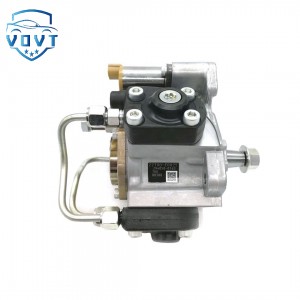
Diesel Fuel Injection Pump R9044Z162A Engine Auto Engine Part


products description
| Reference Code | R9044Z162A |
| MOQ | 1 PCS |
| Certification | ISO9001 |
| Place of Origin | China |
| Packaging | Neutral packing |
| Quality Control | 100% tested before shipment |
| Lead time | 7~15 working days |
| Payment | T/T, Western Union, Money Gram, Paypal, Alipay, Wechat |
Investigation of Internal Leakage Mechanisms and Efficiency Degradation in Engine Oil Pumps
As a key component of the engine lubrication system, the oil pump is responsible for delivering sufficient lubricating oil to all friction pairs under various operating conditions. While oil pump performance is often evaluated based on nominal flow rate and pressure capability, long-term efficiency degradation caused by internal leakage is an increasingly important issue, especially in modern engines with extended service intervals and higher operating temperatures.
Internal leakage in oil pumps primarily occurs through clearances between moving components, such as gear tooth side gaps, rotor tip clearances, and axial end-face gaps. These leakage paths are necessary to ensure manufacturability and prevent mechanical seizure; however, excessive leakage significantly reduces volumetric efficiency. Under high-temperature operation, thermal expansion and oil viscosity reduction further aggravate leakage losses, resulting in insufficient oil delivery at low engine speeds.
Experimental studies show that internal leakage has a strong dependency on operating conditions. At low speeds and high oil temperatures, leakage flow may account for a considerable portion of the total pump output, leading to delayed oil pressure buildup. This condition is particularly critical during idle operation and hot restart scenarios, where lubrication demand remains high while pump driving power is limited.
The geometry of internal clearances plays a decisive role in leakage behavior. Non-uniform clearances caused by manufacturing deviations or uneven wear lead to asymmetric leakage distribution, which can induce pressure pulsations and localized lubrication starvation. In addition, surface roughness and micro-texture on leakage interfaces influence oil flow characteristics, affecting both leakage rate and friction losses.
To mitigate efficiency degradation, design optimization strategies focus on improving clearance stability and leakage control. Advanced machining techniques enable tighter and more consistent tolerances, while optimized axial compensation structures help maintain effective sealing under varying load conditions. In some oil pump designs, pressure-balanced elements are introduced to adaptively adjust clearances in response to operating pressure, reducing leakage without increasing friction.
Material selection and surface engineering also contribute to leakage reduction. Wear-resistant materials help preserve clearance geometry over long service periods, while surface coatings reduce friction and slow wear progression. From a system perspective, integrating oil pump performance monitoring into engine control systems allows early detection of efficiency loss and supports adaptive lubrication strategies.
In conclusion, internal leakage is a major factor influencing oil pump efficiency and long-term performance stability. By understanding leakage mechanisms and their interaction with operating conditions, oil pump designs can be optimized to maintain high volumetric efficiency throughout the engine’s service life. These improvements are essential for ensuring reliable lubrication, reducing energy losses, and supporting the development of more efficient and durable engine systems.
Products categories
-
High Pressure Common Rail Diesel Fuel Injector ...
-

High Pressure Fuel Injection Pump 131017951 for...
-
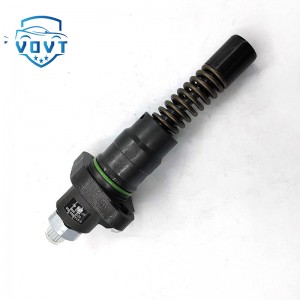
Fuel Injector Unit Pump 0414693005 for Deutz En...
-

Original Common Rail Diesel Fuel Injection Pump...
-

Diesel Fuel Injection Pump 1G777-51011 Engine A...
-

Hot Selling Common Rail Diesel Fuel Injection U...


