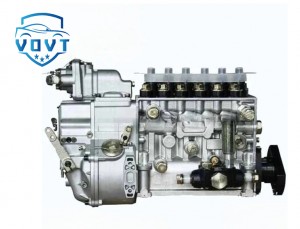
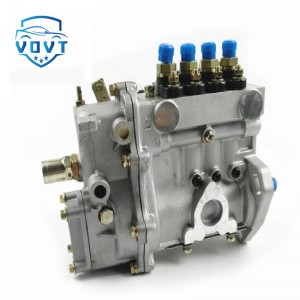
Diesel Fuel Injection Pump 294000-0611 Engine Auto Engine Part


products description
| Reference Code | 294000-0611 |
| MOQ | 1 PCS |
| Certification | ISO9001 |
| Place of Origin | China |
| Packaging | Neutral packing |
| Quality Control | 100% tested before shipment |
| Lead time | 7~15 working days |
| Payment | T/T, Western Union, Money Gram, Paypal, Alipay, Wechat |
Initial Pressure Build-Up Lag and Response Characteristics in Diesel Fuel Pumps
In diesel fuel systems, the ability of a fuel pump to respond quickly to changing engine demands is critical. One important aspect of this behavior is the initial pressure build-up phase, where a short delay—often referred to as pressure lag—occurs before the pump reaches the required operating pressure.
At the beginning of a pumping cycle or during rapid load changes, the pump must first overcome internal compressibility and system elasticity. Fuel, although relatively incompressible, still exhibits slight volume reduction under high pressure. Additionally, small clearances within the pump allow minor internal deformation, which contributes to delayed pressure rise.
This initial lag affects how quickly fuel can be delivered to the injection system. In high-speed engines, even a small delay may lead to a mismatch between injection timing and engine cycle requirements. Therefore, minimizing pressure lag is essential for maintaining accurate fuel delivery.
Several factors influence the pressure build-up response. The stiffness of the pump structure plays a key role; a more rigid pump body reduces deformation under pressure, allowing faster pressure rise. Similarly, minimizing internal dead volume reduces the amount of fuel that must be compressed before reaching effective pressure.
Plunger motion characteristics also affect response time. A steeper cam profile can accelerate plunger movement, increasing the rate of pressure rise. However, excessive acceleration may introduce mechanical stress and vibration, requiring careful design balance.
Sealing performance is another important factor. Internal leakage reduces effective compression, extending the time needed to reach target pressure. High-precision manufacturing ensures tight clearances, improving response efficiency.
Fuel temperature and properties also influence pressure dynamics. Warmer fuel with lower viscosity may increase leakage, while colder fuel may slow flow into the chamber, both affecting response behavior.
In summary, the initial pressure build-up lag in diesel fuel pumps is a key factor influencing system responsiveness. Optimizing structural rigidity, minimizing internal volume, and improving sealing performance are essential for achieving fast and stable pressure response in modern fuel systems.