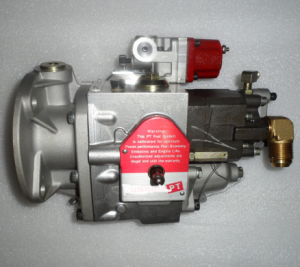
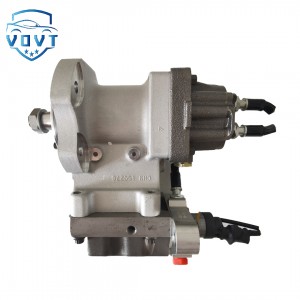
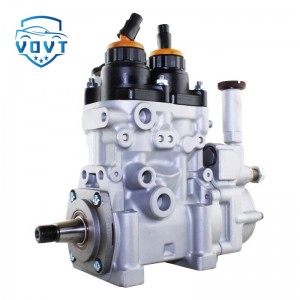
Diesel Fuel Injection Pump 196000-2653 22100-1C201 Engine Auto Engine Part


products description
| Reference Code | 196000-2653 |
| MOQ | 1 PCS |
| Certification | ISO9001 |
| Place of Origin | China |
| Packaging | Neutral packing |
| Quality Control | 100% tested before shipment |
| Lead time | 7~15 working days |
| Payment | T/T, Western Union, Money Gram, Paypal, Alipay, Wechat |
Thermal Management and Efficiency Balance in High-Pressure Diesel Fuel Pumps
High-pressure diesel fuel pumps operate under demanding mechanical and thermal conditions. While their primary task is to generate sufficient pressure for fuel injection, thermal behavior within the pump significantly influences overall efficiency, durability, and pressure stability.
During compression, mechanical energy is converted into hydraulic energy, and part of this energy is dissipated as heat. Continuous high-pressure operation causes temperature rise inside the pump housing. If heat accumulation is not properly managed, internal clearances may change due to thermal expansion, affecting volumetric efficiency and pressure consistency.
Fuel itself plays a dual role in thermal regulation. As fuel circulates through the pump, it absorbs heat generated by friction and compression. This circulating flow helps stabilize internal temperature. However, excessive recirculation increases return fuel temperature, potentially reducing viscosity and increasing internal leakage.
Viscosity variation directly impacts sealing performance between plunger and barrel assemblies. At higher temperatures, reduced viscosity weakens the hydrodynamic sealing film, leading to increased leakage and lower effective output. Conversely, at low temperatures, higher viscosity increases flow resistance and mechanical load.
Material selection is critical in managing thermal stress. Components must withstand repeated expansion and contraction without losing dimensional stability. High-strength alloys with controlled thermal expansion coefficients help maintain precise internal alignment under varying temperature conditions.
Heat distribution within the pump also affects long-term durability. Uneven temperature gradients may create localized stress concentrations, accelerating fatigue in certain regions. Proper structural design ensures uniform heat dissipation and minimizes distortion.
Efficient fuel metering strategies contribute to thermal balance as well. By regulating inlet fuel quantity according to demand, unnecessary compression work is reduced, lowering heat generation and improving overall efficiency.
In conclusion, thermal management is a fundamental aspect of high-pressure diesel fuel pump performance. Balancing heat generation, fuel circulation, material stability, and efficiency control ensures reliable operation and consistent pressure delivery across diverse engine conditions.