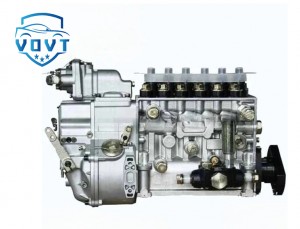
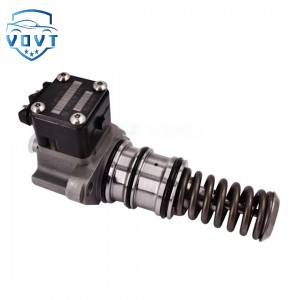
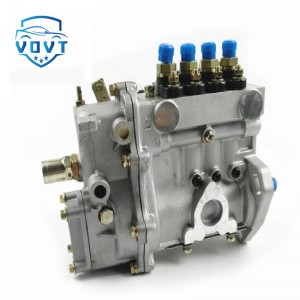
Diesel Fuel Injection Pump 0 445 020 023 0445020023 Engine Auto Engine Part


products description
| Reference Code | 0 445 020 023 |
| MOQ | 1 PCS |
| Certification | ISO9001 |
| Place of Origin | China |
| Packaging | Neutral packing |
| Quality Control | 100% tested before shipment |
| Lead time | 7~15 working days |
| Payment | T/T, Western Union, Money Gram, Paypal, Alipay, Wechat |
Adaptive Oil Pump Flow Regulation Based on Real-Time Operating Conditions
With the increasing demand for higher energy efficiency and reduced parasitic losses in modern engines and industrial power systems, conventional fixed-displacement oil pumps are facing significant limitations. These pumps typically operate at maximum capacity regardless of actual lubrication demand, resulting in excessive energy consumption, oil heating, and unnecessary wear. To address these challenges, this study investigates an adaptive oil pump flow regulation concept based on real-time operating conditions.
The proposed system integrates a variable-flow oil pump with pressure, temperature, and rotational speed sensors to dynamically adjust oil delivery. Instead of maintaining a constant flow rate, the pump output is continuously regulated according to lubrication requirements under different operating states, such as cold start, steady cruising, and high-load conditions. A control algorithm processes sensor signals and determines the optimal pump displacement or bypass valve opening to ensure sufficient lubrication while minimizing hydraulic losses.
A mathematical model of the adaptive oil pump is established to describe the relationship between pump speed, displacement, oil viscosity, and system pressure. Simulation results show that under low-load conditions, the regulated pump significantly reduces excess flow compared with a conventional pump, leading to lower pressure losses and reduced mechanical power consumption. During high-load or high-temperature operation, the system rapidly increases oil flow to maintain stable lubrication and thermal management.
Experimental validation is carried out on a test bench equipped with an electronically controlled oil pump prototype. Measured results confirm that the adaptive system maintains stable oil pressure within the desired range while reducing pump drive power by up to 18% under partial-load conditions. In addition, oil temperature rise is effectively suppressed due to reduced throttling losses, contributing to improved oil life and system reliability.
The study also analyzes system response time and control stability. Results indicate that the adaptive oil pump can respond quickly to sudden load changes without causing pressure oscillations or lubrication delays. Compared with traditional mechanical regulation methods, the proposed approach offers higher flexibility and improved adaptability to varying operating environments.
Overall, adaptive oil pump flow regulation represents an effective solution for improving energy efficiency and durability in modern lubrication systems. The findings of this study provide a technical foundation for the development of next-generation intelligent oil pumps in automotive, industrial, and hybrid power applications.