
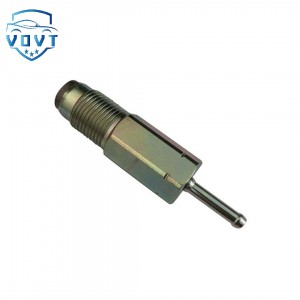
Common Rail Control Valve 7206-1010 Fuel Injector Valve Diesel Injector Control Valve


Products Description
| Reference Codes |
7206-1010 |
| Application | / |
| MOQ | 6PCS |
| Certification | ISO9001 |
| Place of Origin | China |
| Packaging | Neutral packing |
| Quality Control | 100% tested before shipment |
| Lead time | 7~10 working days |
| Payment | T/T, L/C, Paypal, Western Union, MoneyGram or as your requirement |
Influence of Manufacturing and Assembly Accuracy on Control Valve Stability
Control valves used in fuel injection systems require extremely high manufacturing and assembly precision to ensure stable and repeatable operation. Due to the small size of internal flow passages and moving components, even minor deviations can significantly affect valve performance.
Manufacturing accuracy directly determines the dimensional consistency of valve elements such as valve seats, spools, and guide surfaces. Small variations in diameter or roundness can change flow characteristics and increase internal leakage. These effects reduce the ability of the control valve to precisely regulate pressure, leading to fluctuations in injector response.
Assembly accuracy is equally important. Misalignment between moving components increases friction and causes uneven wear during operation. This may result in delayed valve response or unstable motion under high-frequency cycling conditions. In extreme cases, assembly errors can lead to valve sticking or incomplete closure.
Surface finish quality also plays a key role in control valve stability. Rough surfaces increase flow resistance and disrupt pressure regulation within control chambers. Poor surface quality may also accelerate wear, shortening valve service life and degrading control accuracy over time.
Temperature variations further amplify the influence of manufacturing and assembly deviations. Thermal expansion changes component clearances, which may cause leakage to increase or movement resistance to rise. Valves with tight tolerance control are better able to maintain stable performance across a wide temperature range.
To ensure reliable control valve operation, strict quality control measures are applied during manufacturing and assembly. Precision machining, dimensional inspection, and functional testing help identify defects before final assembly. Clean assembly environments are also critical to prevent contamination-related issues.
In conclusion, manufacturing and assembly accuracy play a decisive role in the stability and reliability of control valves. High-precision production and careful assembly are essential for maintaining consistent valve behavior and ensuring accurate fuel injection control.
Products categories
-

High Precision New Diesel Injector Control Valv...
-

High Precision New Diesel Common Rail Injector ...
-

High Quality New Common Rail Diesel Injector Co...
-
High Quality New Fuel Pressure Relief Valve 095...
-

High Quality Common Rail Control Valve Set Asse...
-

High Precision New Diesel Injector Control Valv...


