
ACT Research said the recent diesel price surge has tightened truckload capacity, impacting spot market rates.
ACT Research said the freight cycle is showing signs of strengthening as rising diesel prices tighten capacity and support higher spot rates. This is according to the company’s latest Freight Forecast: Rate and Volume OUTLOOK report.
The company noted that spot rates have increased alongside fuel costs in recent weeks, despite the absence of fuel surcharges in the spot market.
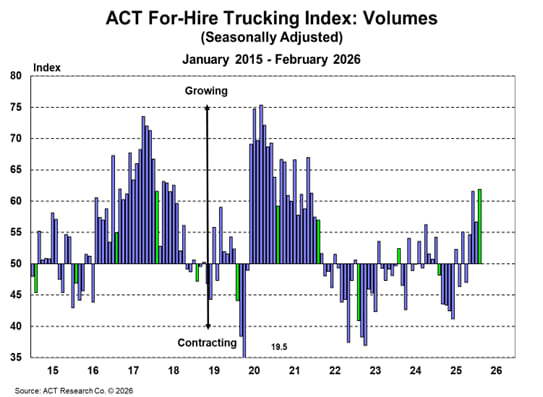
ACT Research data shows volumes hitting a four-year high and supply-demand balance strengthening, but higher oil prices are undercutting tariff relief and tempering optimism.
February data from ACT Research indicates improving conditions for trucking last month, as freight volumes increased while capacity continued to contract.
ACT’s For-Hire Trucking Volume Index rose to a four-year high, bolstered by January’s large winter storm that buffeted the Midwest, South, and East Coast and created a backlog of freight.
“For-hire volumes are benefitting from slowing/contracting private fleet growth, putting loads into the for-hire market, even with the current absence of a broader freight demand recovery,” said Carter Vieth, Research Analyst at ACT Research.
The ACT For-Hire Trucking Index is a monthly survey of for-hire trucking service providers. ACT Research converts responses into indexes, where the neutral or flat activity level is 50.
Tariff Relief vs. Higher Oil Prices
The repeal of IEEPA tariffs and the expiration of §122 tariffs in 150 days should lower the effective tariff rate by roughly 10% and may help to trigger a restock, he said. However, higher oil prices following the conflict with Iran have effectively negated any tariff benefit to consumers in the short term, potentially slowing economic (and freight volume) growth.
ACT’s Capacity Index ticked down slightly, marking the 11th month in a row in neutral/contraction territory.
ACT’s Trucking Pricing Index rose 5.3 points month over month as winter storms tightened capacity and aided volumes, creating a backlog of loads.
Broadly speaking, ACT said, pricing has improved this year on sustained capacity exits and choppy, if gradually improving, volumes in the market.
“Capacity continues to exit as current levels of profitability, despite recent pricing improvements, remain a constraint on investment,” Vieth said.
FTR: Trucking Conditions Index Climbs to Highest Level Since 2022
“Weather also had an effect, allowing for some improvement in the coming months. Increased truck orders since the news that EPA’27 will still happen partially is driving some purchasing, but capacity additions will likely be modest until we get closer to 2027.”
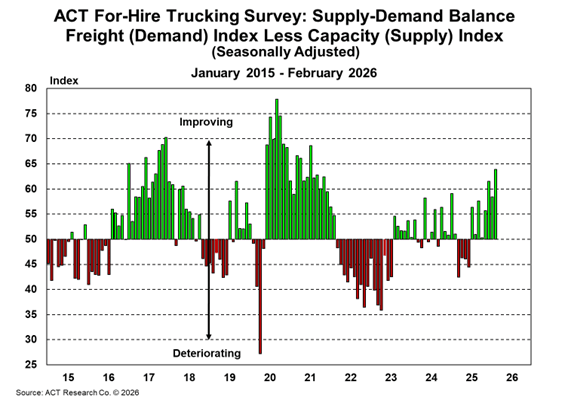
Graph showing ACT Research For-Hire Supply and Demand Balance
ACT’s Supply-Demand Balance increased in February to 63.9 (seasonally adjusted, from 58.4 in January, a 4.5-year high as volumes increased and capacity continued to contract.
What’s Next for Trucking?
ACT’s Supply-Demand Balance rose to a 4.5-year high as volumes increased and capacity continued to contract.
Though the freight cycle is beginning to kick into gear, ACT said, it will likely be hard for fleets to expand capacity amid FMCSA’s enforcement efforts targeting immigration and nondomiciled CDL drivers.
“The extra $1.50 per gallon is a new capacity constraint on the TL market. The TL rate outlook has risen as tighter driver and equipment availability drive spot market momentum, with a few signs of improving demand,” Denoyer said.
Post time: Apr-14-2026


